

Oct 8, 2026
Most schools don’t launch a professional learning community (PLC) and watch it fail on day one. In fact, it’s quite the opposite. The first few meetings feel energized, and teachers show up ready to dig into data, genuinely excited about where the work is headed.
Then, three months in, something shifts. Meetings start running long on logistics and short on substance. The same two people do most of the talking. Data gets mentioned but rarely examined (and certainly not understood or acted on). By the time anyone notices, the PLC has devolved into another meeting people attend rather than a process that improves instruction.
Unfortunately, this drift is common enough that it’s earned a name in K-12 schools: PLC Lite. Basically, a version of the model that keeps the structure but loses the substance.
And it’s almost always the result of a small, predictable set of implementation missteps.
Let’s look at the most common mistakes and what leaders can do to fix them, whether a PLC is just getting off the ground or has been spinning its wheels for a while.
Why PLC implementation mistakes are so common
PLCs ask educators to do something objectively difficult: sit with uncomfortable data and question long-standing instructional habits. That’s a big shift from how most staff meetings function, and it doesn’t work automatically just because a school schedules the time and calls it a PLC.
The majority of implementation mistakes trace back to one root issue: schools create the structure of a PLC (the schedule, the meeting title, the team assignments) without doing the harder work of building the culture that makes the structure meaningful.
The good news is that each mistake below has a clear, addressable fix.
7 common PLC implementation mistakes
Treating PLC time like a staff meeting
The problem: The team spends 40 minutes on scheduling and upcoming events, then realizes there’s no time left for real data or instructional discussion.
Why it happens: PLC is sometimes the only shared time teachers have, so it becomes a catch-all for whatever needs announcing. Nobody wants to be the stickler who says “that’s not what this time is for.”
The fix: Separate PLC time from staff communication time on paper and in practice. Give every PLC meeting a written protocol or agenda template that opens with a student-learning question. If announcements matter, send them by email and protect the PLC agenda for instructional work.
Letting the PLC slide into “PLC Lite”
The problem: The team meets on schedule and jots down notes, but the conversations never seem to get past the surface. Data gets mentioned but never examined. Everyone agrees things are “fine.” Yikes.
Why it happens: Deep data conversations require some discomfort; naming which students aren’t learning and why can feel like a personal critique of instruction. It’s easier and less confrontational to keep discussions general.
The fix: Build specific, non-negotiable questions into the protocol: Which students met the standard, and which didn’t? What did the team do differently for those who succeeded? A facilitator’s job is to keep pulling the group back to these questions whenever the conversation drifts toward the general.
Failing to protect PLC time in the master schedule
The problem: PLC time gets bumped for assemblies or testing windows, again and again, until the team stops expecting it to happen at all.
Why it happens: When PLC time isn’t treated as instructionally essential, it’s the easiest thing on the calendar to sacrifice when something else comes up (and for educators, something else always comes up).
The fix: This one is squarely an administrator responsibility. Protecting PLC time in the master schedule and treating it as a non-negotiable, the way a class period would be, signals that the work happening in that time matters.
Leaving roles and accountability undefined
The problem: Nobody’s sure who’s supposed to run the meeting or make the call when the team disagrees, so decisions aren’t really purposeful.
Why it happens: Roles feel obvious until a team is in the thick of it, and unspoken assumptions rarely match up person to person.
The fix: Assign clear meeting-level roles (facilitator, note-taker, timekeeper) and team-level roles (team lead) from the start and rotate meeting roles regularly so the responsibility doesn’t fall on one person. For a full breakdown of how these roles should work together, see our guide on PLC roles and responsibilities.
Administrators disengaging or micromanaging
The problem: Either the principal never appears, so the PLC never gets the resources or visibility it needs, or the principal treats meetings as a compliance check, so teachers stop being honest about what isn’t working.
Why it happens: Some administrators haven’t been given a clear model for what productive PLC involvement looks like, so they default to one extreme or the other.
The fix: The role in between is checking in with the team leads, reviewing notes periodically, removing obstacles, and celebrating specific wins, without sitting in on every meeting or treating the data as a performance review. When principals do attend, modeling a growth mindset (“we aren’t there yet, and that’s ok!”) does far more for honesty than checking off “Did everyone participate?” or “Did they look at data?”
Talking about data without acting on it
 The problem: The team identifies a real instructional gap and has a good conversation about it, then moves on to the next agenda item without ever really changing what happens in the classroom.
Why it happens: Identifying a problem feels like progress, and it’s far easier than the follow-through of adjusting instruction and monitoring whether the change worked.
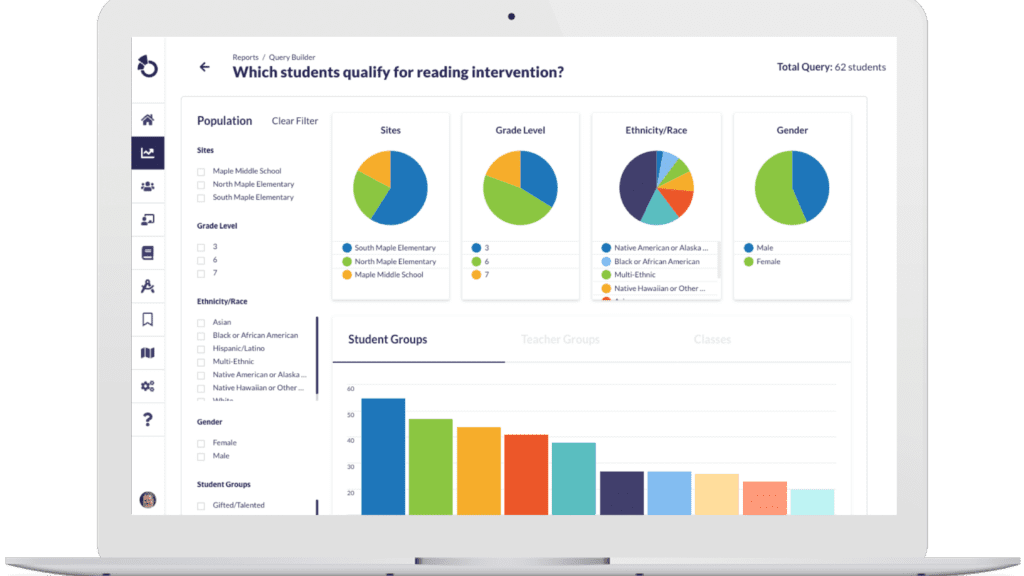
The fix: Every data conversation should end with a specific, assigned next step and a date to revisit it. This is also where having fast access to real-time, standards-aligned data helps tremendously. When teams can pull up-to-date progress monitoring straight from a shared dashboard, follow-up becomes a five-minute check rather than a full re-analysis.
Treating PLC work as disconnected from school-wide systems
The problem: The PLC identifies which students need additional support, but that information never connects to the school’s broader MTSS process, so the same students get re-identified over and over without a coordinated intervention plan.
Why it happens: PLCs and MTSS teams sometimes run on separate schedules with separate data pulls, even though they’re both trying to answer the same question about which students need what.
The fix: Build an explicit hand-off between PLC data conversations and MTSS tiering decisions, ideally using the same data source, so a student flagged in a PLC meeting doesn’t disappear into a separate process the following week.
PLC Lite: When a PLC isn’t really a PLC
PLC Lite is worth mentioning because it’s arguably the failure that’s hardest to self-diagnose. A PLC Lite team isn’t dysfunctional in any obvious way. Meetings happen and notes get taken, without anyone raising an objection. That’s exactly what makes it dangerous; everything looks fine from the outside.
The difference comes down to what the conversation does. A real PLC uses data to change what happens in classrooms the following week. A PLC Lite team uses data as a topic of discussion and leaves the meeting with instruction unchanged. If a team can’t point to a specific decision made in, say, the last month as a direct result of a PLC conversation, that’s a strong sign that the group has drifted into PLC Lite territory.
How long does it take to fix a struggling PLC
Schools might see a shift in meeting quality within 1-2 months of introducing clearer protocols and roles, since that’s usually enough time for a team to run through a few cycles with the new approach. Shifts in actual student outcomes will likely take longer, since instructional changes need time to reach students and show up in the data.
Leaders should watch for engagement and conversation quality as the early indicator and treat outcome data as the longer-term confirmation that the fix is working.
Frequently Asked Questions
Why do PLCs fail or stop working after what seems like a strong start?
PLCs tend to drift over time. Without protected time and protocol that keeps data conversations specific, teams gradually default to easier, less substantive patterns, even when they started strong.
What are the most common mistakes schools make when starting a PLC?
The most frequent starting mistakes are letting PLC time turn into a general staff meeting and failing to protect that time on the schedule. Either one is preventable with upfront planning.
How do you fix a PLC that isn’t working?
Start by naming the specific pattern: is the team skipping data entirely, or discussing it without following through? Either has a different fix, but both benefit from a written protocol and administrator support that protect the team’s time.
What is PLC Lite?
PLC Lite describes a team that has the structure of a PLC, regular meetings, and an agenda, but none of the substance. The clearest difference is action. A real PLC’s data conversations lead to specific instructional changes, while a PLC Lite team’s conversations tend to end without one.
What sets a PLC apart from other staff meetings?
The goal of a staff meeting is to share new information; it’s focused on announcements and logistics. A PLC is built around a specific, recurring question: what are students learning, and what’s our evidence? Confusing (or worse, intentionally combining) the two is one of the most common reasons PLCs stall.
Making PLC fixes stick
Every mistake on this list is fixable, and most schools don’t need to completely overhaul their entire PLC process to see a difference. Clearer protocols and fast access to the right data go a long way. Otus supports that last piece directly, with standards-aligned dashboards and progress monitoring that give teams a shared, up-to-date source of truth the moment they sit down to meet.
Related Resources
Request a demo!
See exactly how Otus can help your school accelerate student growth and improve student outcomes – all while saving educators time.