

Oct 8, 2026
Everyone in a professional learning community has a job. But in some schools, nobody has been told exactly what that job is.
A teacher shows up to a PLC meeting, not sure whether they should be sharing data or just listening. A team lead isn’t sure if they’re supposed to be facilitating or just keeping an eye on the clock. A principal wonders whether they should be in the room at all, and if so, how to support without micromanaging.
When PLC roles and responsibilities aren’t clearly defined from the start, even eager, well-intentioned teams drift into unproductive patterns: meetings that meander, data conversations that stay surface-level, and changes to practice that never quite stick.
This guide cuts through the confusion. We’ll break down who does what in a PLC, from meeting-level roles to team leadership to the administrator’s role in making it all work. Because when everyone knows their part, PLCs start to produce the outcomes they were designed to deliver.
Why role clarity matters in a PLC
Research on high-performing PLCs consistently points to one common differentiator: intentional structure. And that structure starts with roles.
Without clear role assignments, three things tend to go wrong:
- One person carries the weight. One motivated teacher runs every meeting, tracks every action item, and eventually burns out.
- Nobody owns the hard calls. When nobody is accountable for a decision, the team defaults to agreement without conviction.
- Data conversations lack depth. Without a designated person to surface and frame student data, meetings fill up with housekeeping and scheduling instead of student learning.
PLC meetings aren’t the time to sort out the basics, and clear roles are what let a team walk in ready to work.
The three tiers of PLC roles
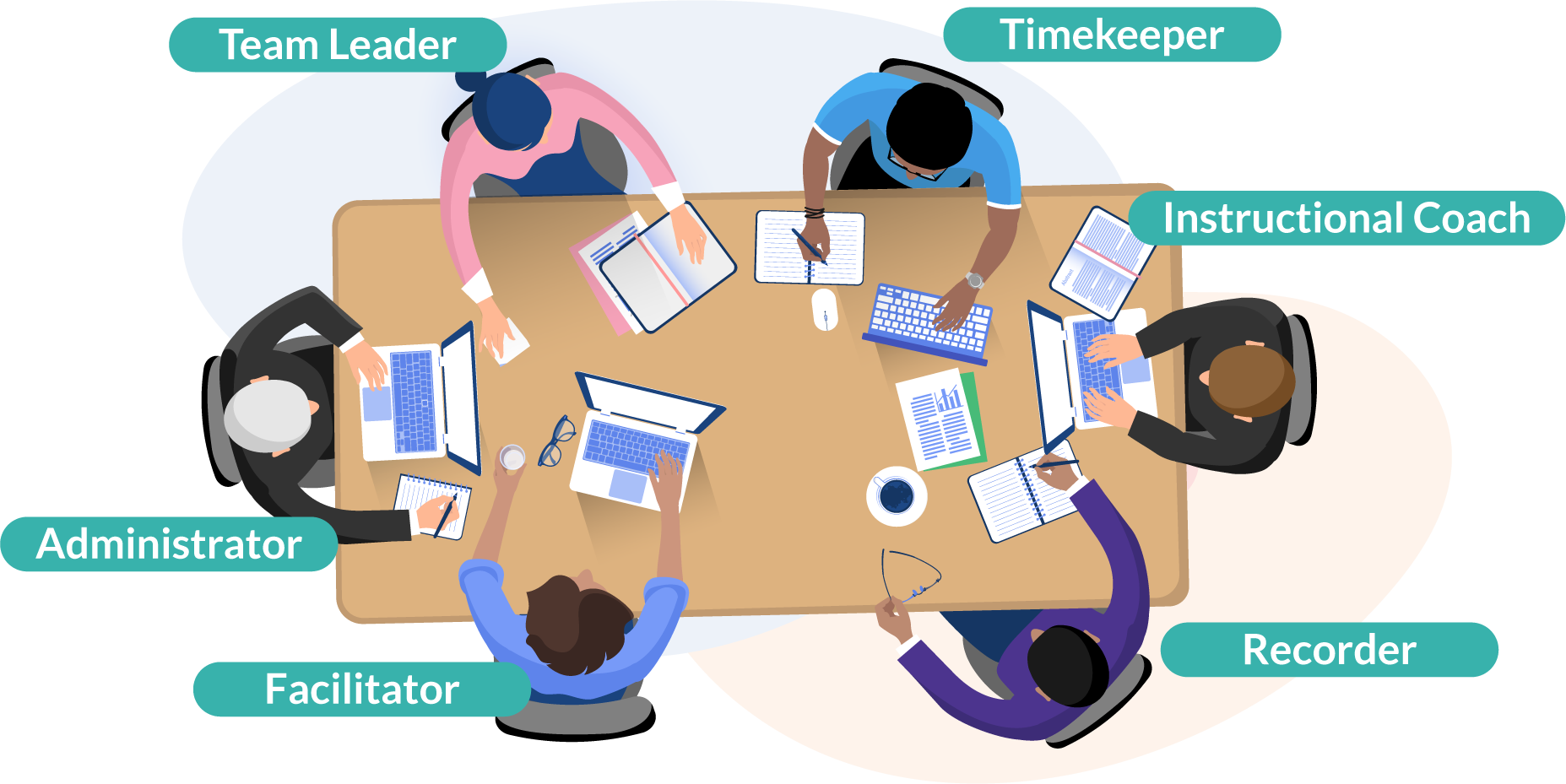
PLC roles operate at three distinct levels: within meetings, within the team, and at the school or district level. Mixing these up is one of the most common sources of role confusion, especially the difference between a meeting facilitator and a team lead.
Tier 1: Meeting roles
These roles rotate among team members and are specific to the functioning of each PLC meeting. Ideally, they should shift from cycle to cycle so the workload is shared and everyone builds facilitation skills over time.
Facilitator
The facilitator opens the meeting, guides the team through the agenda, manages time, and closes with a summary of decisions and next steps. Their job is to make sure the group reaches answers together.
One common mix-up worth naming: a facilitator manages the meeting; a team lead manages the work between meetings. These can be the same person, but they are distinct responsibilities.
Note-Taker/Recorder
The record captures what matters, including key discussion points, decisions made, and action items with owners and due dates. Good notes are the memory of a PLC, the source of truth. They’re what connect this meeting to the next one and what keeps the team accountable to what it said it would do.
Timekeeper
The timekeeper monitors time against the agenda and signals the facilitator before any section runs over. Agenda drift is one of the most common reasons PLC meetings feel unproductive, and this role exists specifically to prevent it.
Data Analyst (optional, but recommended)
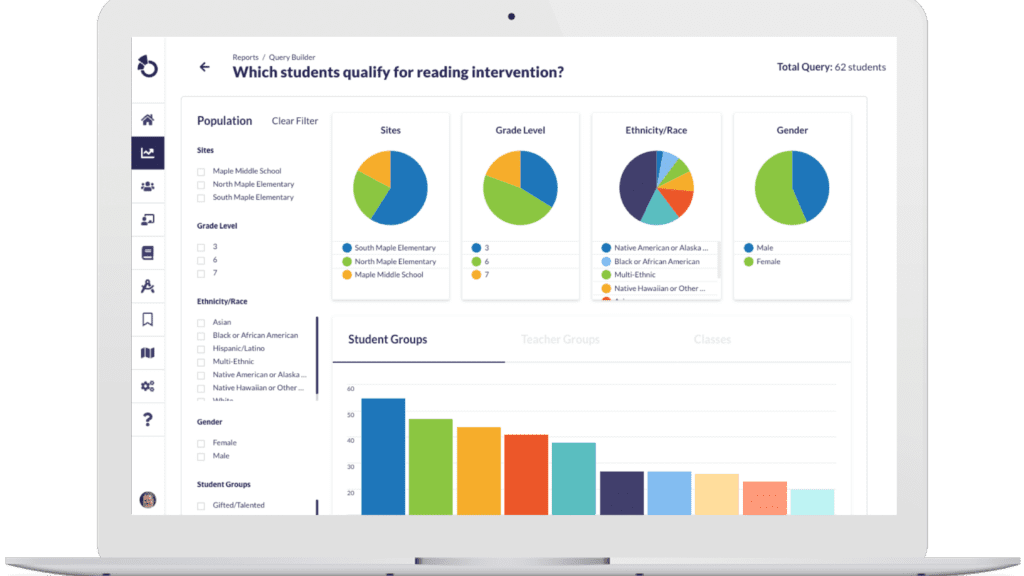
In PLCs that regularly work with student performance data, it helps to have someone pull and prepare the data before the meeting, so the team isn’t spending the first 10 minutes waiting for a report to load. Teams using Otus can streamline that significantly, with standards-aligned dashboards and progress monitoring reports available in a single view.
Tier 2: Team-level leadership roles
These roles are more sustained, typically held for a semester or a full year, and carry responsibility for the team’s functioning between meetings.
PLC Leader/Team Leader
The team lead is the connective tissue of the PLC. They set and distribute agendas, communicate progress to administrators, monitor whether action items are getting done, and escalate challenges the team can’t resolve on its own. This is usually a teacher leader: someone with credibility among peers and a strong grasp of the team’s work.
The most important thing a team lead can do is model collaborative decision-making. The goal is for the whole team to own their work.
Instructional Coach (when embedded in the PLC)
When an instructional coach is assigned to a PLC, their focus is on bridging classroom practice and the team’s learning goals. Think modeling lessons, co-planning, interpreting assessment results, and connecting PLC work to school-wide priorities. That’s a different job from the team lead’s, and keeping the two distinct prevents a lot of confusion. A team lead manages logistics and accountability; an instructional coach brings instructional expertise. Both roles can exist in the same PLC, and ideally, they work closely together.
Tier 3: Administrator roles
Perhaps no role is more misunderstood (or more underutilized) than the administrator’s role in a PLC.
The Principal’s role in a PLC
The most effective principals treat PLC health as a direct indicator of school culture. In practice, that means protecting PLC time in the master schedule, ensuring teams have access to the data and tools they need, reviewing team notes periodically, and checking in with team leads. It also means communicating a clear vision for what PLCs are expected to accomplish and celebrating team wins specifically and publicly.
The District Administrator’s role in a PLC
At the district level, the priority is coherence. That means ensuring every school has the time, tools, and training for PLCs to function, and aligning expectations across schools without stripping away building-level autonomy. District administrators who do this well create the conditions for principals to lead PLC work effectively, rather than bypassing them.
How to assign PLC roles: Practical tips
Start with transparency
Before the first meeting, share a simple overview of each role and what it entails. Confusion at the start is much cheaper than resentment three months in.
Rotate meetings regularly
Keeping the same person as facilitator or recorder creates dependency. Rotation builds capacity and signals that the PLC belongs to everyone.
Keep meeting roles and leadership roles separate in your documentation
They operate on different timescales and carry different kinds of accountability. Mixing them up creates confusion about who is responsible for what.
Revisit roles when the team changes
A new teacher mid-year, a team lead on vacation, or even a new school grading initiative. Any of these is a good moment to re-norm.
Tie roles to outcomes
The most durable role clarity happens when everyone understands why their role matters. A note-taker who sees how their documentation drives next steps takes better notes. A team lead who connects their work to student outcomes leads with more purpose.
When role clarity connects to student outcomes
None of this structure is an end in itself. PLC roles exist so that teams can do the real work: analyzing student performance, adjusting instruction, and ensuring every student is learning.
When roles are clear and functioning well, PLCs can operate the way they were designed to, as engines of continuous improvement. Teams can move from surface-level discussions to the kinds of data conversations that truly shift practice. Ultimately, the improved student outcomes justify the investment of time.
Otus supports every stage of that work, from meeting-level data pulls that save teams time to standards-aligned dashboards that keep the whole PLC working from the same source of truth. Whether your team is just getting its roles in order or looking to deepen its data conversations, Otus is built to meet you where you are.
Questions about PLCs
What is the role of a PLC leader?
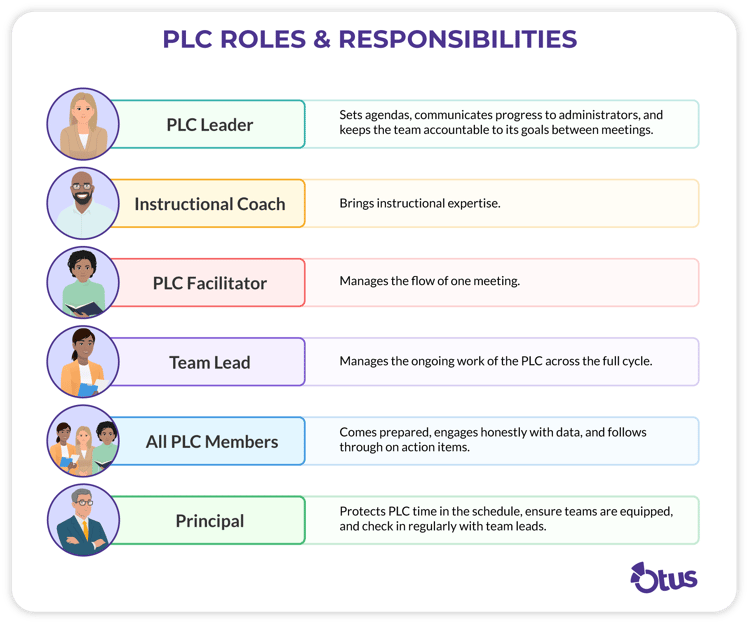
A PLC leader (or team lead) sets agendas, communicates progress to administrators, and keeps the team accountable to its goals between meetings. This role is distinct from a meeting facilitator, who manages a single session, and an instructional coach, who brings instructional expertise.
What’s the difference between a PLC facilitator and a team lead?
A facilitator manages the flow of a meeting. A team lead manages the ongoing work of the PLC across the full cycle. In smaller teams, one person can do both, but they are separate responsibilities.
How should a principal be involved in a PLC?
Principals should protect PLC time in the schedule, ensure teams are equipped, and check in regularly with team leads. When attending meetings, the most effective approach is to model a growth mindset using phrases like "we aren't there yet" so that teachers feel safe being honest about where students are struggling.
How do you assign PLC roles?
Start by distinguishing meeting roles (facilitator, recorder, timekeeper) from team-level roles (team lead, instructional coach). Rotate meeting roles regularly, and revisit all assignments whenever team composition changes.
What are the responsibilities of all PLC team members?
Every member is responsible for coming prepared, engaging honestly with data, and following through on action items. While assigned roles clarify how each person contributes, the commitment to student learning belongs to everyone.
How confident do you feel with where the company is going?
We will begin in this chapter by dealing with some general quantum mechanical ideas. Some of the statements will be quite precise, others only partially precise. It will be hard to tell you as we go along which is which, but by the time you have finished the rest of the book, you will understand in looking back which parts hold up and which parts were only explained roughly.
Related Resources
Request a demo!
See exactly how Otus can help your school accelerate student growth and improve student outcomes – all while saving educators time.