

Oct 27, 2026
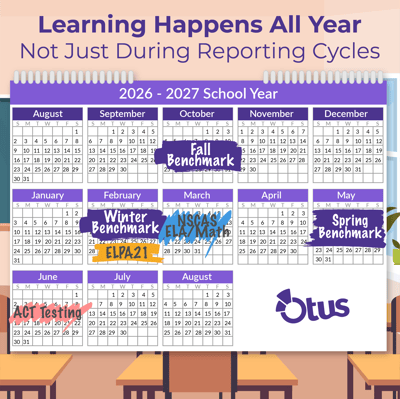 If you mapped the school year on a calendar in many districts, certain days would stand out immediately. State testing windows, benchmark assessments, and end-of-semester grade reporting all come to mind.
These dates carry weight because they tell us when we’ll pause to measure learning. Meanwhile, learning continues every day in classrooms across the state.
And that raises an important question for school leaders: If learning is continuous, are the systems we use to improve instruction continuous as well?
Nebraska’s vision for continuous improvement
School leaders talk frequently about improvement. Not just improvement in test scores, but in instruction. Improvement in student growth. Improvement in equity, opportunity, and future readiness. And since 2015, Nebraska’s accountability model has reflected that philosophy.
Through AQuESTT (Accountability for a Quality Education System, Today and Tomorrow), districts are encouraged to focus on growth over time, examine subgroup progress, and consider indicators of school quality that extend beyond standardized test scores.
The framework signals something important: school quality cannot be understood through a single test or a single moment in time. Growth unfolds across the year, students develop skills gradually, and instruction evolves as educators learn what works.
The intent behind AQuESTT is clear. Improvement should be continuous.
But here’s the thing: there’s an important difference between valuing continuous improvement and actually operationalizing it. And that difference often comes down to timing.
Local control shapes improvement systems
In Nebraska, local control is a defining feature of education—and that flexibility can be a real strength. Districts make key decisions about how improvement work is structured. They select curriculum, determine benchmark assessments, design MTSS frameworks, and choose the tools used to track student progress.
Knowing that, it’s not surprising that improvement systems often look different from one district to the next. One may rely on MAP Growth data between NSCAS testing windows, while another leans on locally designed benchmarks. This flexibility reflects Nebraska’s long-standing belief that local educators understand their communities best.
But it also means the cadence of improvement is shaped by the systems each district builds.
When improvement still happens in cycles
Even in systems designed to prioritize growth, the evidence schools rely on to evaluate progress often arrives in cycles. State assessment results appear annually. Benchmark data may arrive several times a year. Strategic plans are revisited from time to time. And finally, end-of-year reflection meetings help leaders determine what worked and what should change.
Each of these moments plays an important role in understanding system performance. But they share a common feature: they happen periodically. And when evidence is reviewed periodically, response often becomes periodic as well.
Instructional adjustments tend to cluster around reporting windows, and strategic conversations often unfold near the end of the year. In other words, growth becomes something we analyze after it happens rather than while it’s forming.
To be clear, none of this happens because educators lack urgency or commitment.
More often, it happens because the signals educators need simply arrive too late to influence the moment where learning is actually taking place.
Continuous improvement depends on visibility
So what does continuous improvement mean in practice? The simple answer is: how often we change course.
If evidence about student progress only becomes visible during formal reporting cycles, instructional adjustments will naturally cluster around those same moments. But when insight becomes visible earlier, something different happens.
Teachers adjust instruction sooner. Teams identify support strategies more quickly (and more effectively). Leaders begin to notice patterns across classrooms and student groups while those patterns are still forming.
In other words, improvement follows visibility. And visibility, whether we realize it or not, defines timing.
Growth doesn’t follow reporting calendars
Anyone who has spent time in classrooms knows that student growth rarely aligns neatly with reporting schedules. A student’s confidence might skyrocket after one successful assignment. A misconception might surface during a single class discussion. An instructional strategy may begin moving the needle overnight.
The reality is, learning unfolds continuously. But the systems schools use to evaluate growth often wait for scheduled checkpoints. And that creates a quiet disconnect in many improvement efforts.
Educators know improvement should be continuous, yet the signals guiding improvement often appear intermittently. When that becomes the norm, improvement can start to feel episodic—not because educators want it that way, but because that’s when the information they need arrives.
Rethinking the cadence of school improvement
Districts don’t need more meetings or more reports; it doesn’t matter how often data is reported. What matters is how quickly the information educators need becomes visible and actionable.
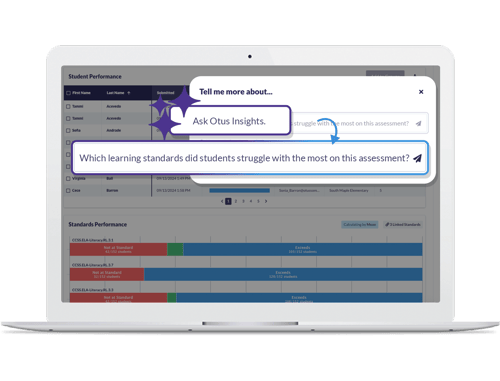
 Increasingly, districts are beginning to rethink the systems or tools that bring student information together. When assessment results, classroom evidence, attendance patterns, and intervention data live in separate places, it can take weeks for a clear picture to emerge. But when those key signals become visible in one place, teams can see changes in student trajectories immediately and respond in a much more meaningful way. Instructional adjustments happen earlier, support strategies become more targeted, and collaborative conversations focus on the students who need attention most.
Over time, improvement begins to look less and less like an annual reflection and more like a steady rhythm of observation, discussion, and adjustment.
Questions Nebraska leaders are beginning to ask
Across Nebraska, district leaders are starting to reflect on how improvement shows up in daily practice. Those conversations likely start with a few simple questions.
Where does student growth become visible between formal reporting windows?
How quickly can teams see when a student’s trajectory begins to change?
Are Tier 1 instructional adjustments happening in real time, or only after benchmark cycles?
What conversations should we be having monthly rather than annually?
Questions like these shift the focus of improvement work. Instead of concentrating only on outcomes, leaders begin examining the systems that make those outcomes visible.
Because when visibility improves, response becomes faster. And when response becomes faster, improvement becomes more continuous.
Continuous improvement is a design choice
It’s easy to think of “continuous improvement” as a mindset. And to be fair, culture does matter. Schools that encourage reflection, collaboration, and shared responsibility for student success are far more likely to sustain improvement over time.
But mindset alone can’t push improvement forward. Only operational design can do that.
Continuous improvement emerges when the systems educators rely on allow them to see change while it’s happening. In other words, when the signals of growth appear earlier, teams respond earlier.
What might seem like minor adjustments accumulate. Instruction evolves gradually as those adjustments take hold. And eventually, learning experiences become more responsive to what students need to thrive.
Improvement becomes less about reacting to past outcomes and more about shaping future ones—and that’s invaluable.
Nebraska’s opportunity
Nebraska already has many of the ingredients needed to support continuous improvement. The AQuESTT framework encourages a broader view of school quality, local control allows districts to shape instructional systems around their communities, and educators across the state remain deeply committed to supporting student growth.
So the real opportunity ahead lies in examining how improvement is operationalized within those systems.
Where does visibility occur?
How quickly does insight reach the teams closest to students?
How often (and closely) do instructional adjustments follow new information?
By asking these questions, Nebraska educators can move the conversation beyond accountability models and toward the daily practices that really drive student success.
Because accountability frameworks can certainly encourage improvement, but they can’t make improvement continuous on their own.
When improvement stops waiting for the calendar
Improvement that lives mainly in annual reports or strategic planning notes can start to feel theoretical rather than tangible in the day-to-day work of schools.
Many teams have experienced this moment: during a benchmark review, they realize a group of students has been struggling with the same concept since the previous unit. The insight is valuable, but it arrives long after the moment when small instructional shifts might have made the biggest difference.
 That experience doesn’t mean your school is doing anything wrong. In many cases, it simply reflects when the information becomes visible.
But when insight surfaces earlier, your work of improvement starts to feel different. A PLC conversation shifts from covering the past to exploring what might need to change next week. A teacher tweaks a strategy during the unit rather than waiting for the next benchmark window to confirm something isn’t working.
In turn, the work stops feeling like a series of checkpoints on a calendar.
It starts to feel like part of the natural flow of teaching and learning, and that’s the main goal here.
What continuous improvement really means for Nebraska schools
Nebraska’s accountability model makes an important promise: that schools will continue learning and improving over time.
Across the state, educators are already doing the work to make that promise real. It shows up in the small decisions that happen every day: a teacher adjusting tomorrow’s lesson after noticing a pattern in student work, a PLC team rethinking an approach after a conversation about what students are struggling to grasp, an intervention shifting earlier because the signs are already there.
These magical moments rarely appear in formal reports. They unfold quietly throughout the school year, often long before anyone writes about them in a strategic plan or an accountability document.
And those small moves add up.
Students experience instruction that responds to what they need in the moment, while teachers and teams gain confidence as they see their strategies come to life and make a difference.
This is what continuous improvement looks like in practice. It takes shape throughout the school year, one decision at a time.
Related Resources
Request a demo!
See exactly how Otus can help your school accelerate student growth and improve student outcomes – all while saving educators time.