

May 1, 2026
Personalized learning has shaped K–12 conversations for years. The idea is familiar: students learn in different ways, at different speeds, and with different levels of support. In theory, instruction adapts to the learner.
But in practice, personalized learning has sometimes been reduced to playlists, self-paced software, or broad differentiation strategies that still leave educators doing the hard work of identifying student needs and determining whether the supports they prescribed are even working.
That’s where a newer term is beginning to emerge: precision learning.
Precision learning brings together data, assessment, evidence-based instruction, progress monitoring, intervention tracking, and AI-powered insights to help educators understand exactly where students need support and what actions are most likely to help. While it might sound awfully similar to personalized learning, precision learning is less about giving every student a learning path for the sake of personalization and more about using the best available evidence to make more accurate, timely decisions for each learner.
Think of it as the new and improved personal learning. “Personalized Learning 2.0,” if you will.
Precision learning vs. personalized learning
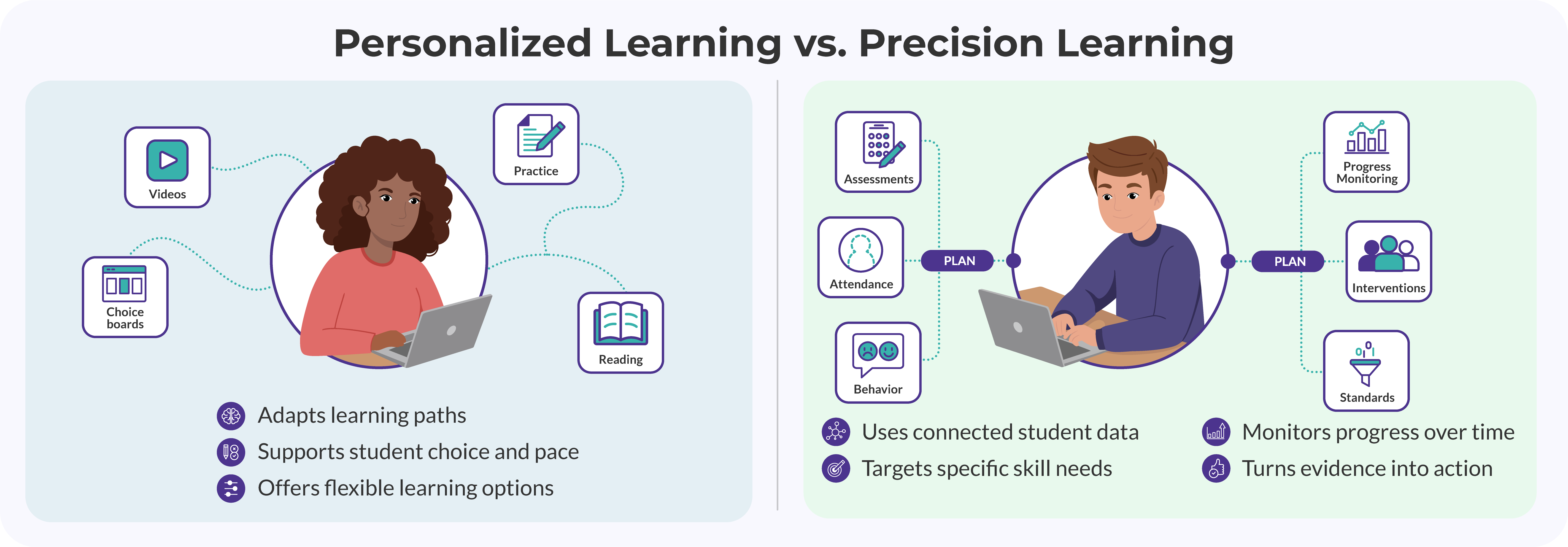
Precision learning builds on the original promise of personalized learning, but with a stronger focus on evidence and systems.
In a K–12 setting, precision learning connects the systems schools already rely on to understand and support students. It brings together student profiles, ongoing assessment, data-driven instruction, MTSS, progress monitoring, standards-based grading, and AI-powered insights so educators can see what students need, respond with targeted support, and adjust based on the results.
At its best, precision learning helps educators move from broad assumptions and gut feelings to specific, data-backed next steps.
Instead of asking, “How is this student doing overall?” teams can ask, “What skill is this student struggling with, and what evidence do we have?” and “What support is most likely to help, and how will we know if it worked?”
Students rarely need generic, one-size-fits-all support. Educators need to provide the right support at the right time, based on the right information.
Why precision learning is gaining attention
Precision learning is emerging at a time when K–12 schools are managing countless challenges all at once. Learning gaps remain a concern, MTSS teams are working to provide timely support, districts are trying to make sense of student data across disconnected systems—the list goes on.
At the same time, AI is changing what’s possible. AI can help educators summarize data and surface patterns, helping educators identify students in need of urgent support. But AI alone does not create precision learning.
For precision learning to work, schools need systems that make student needs visible and connect that information to clear instructional action. Technology can support that work, but educator expertise remains essential.
No system will ever replace professional judgment. What precision learning offers educators is a clearer view of student learning so they can respond with greater confidence.
What precision learning looks like in the classroom
In practice, precision learning starts with a complete student profile. Grades alone rarely tell the full story. A student’s needs are usually connected to assessment performance, attendance trends, behavior patterns, intervention history, cognitive strengths, or progress toward specific standards. When educators can see all those data points together, they can make more informed decisions about what each unique student needs next.
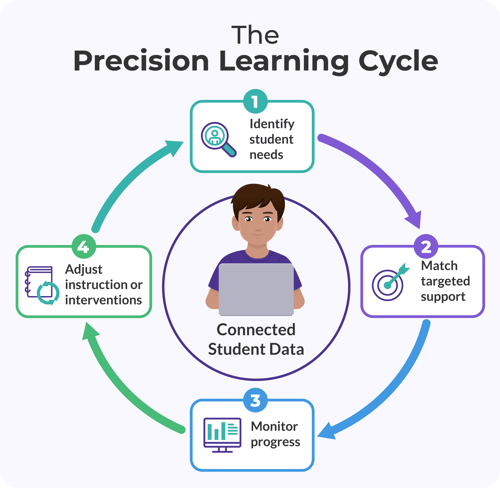 From there, precision learning largely depends on targeted instruction. Assessment data should help educators adjust teaching while there is still time to change the outcome. If several students are struggling with the same skill, the response might involve reteaching or small-group instruction. If just one student needs support, the next step is more than likely targeted intervention.
MTSS is one of the clearest examples of precision learning in action. A solid MTSS framework helps educators identify needs and match students with support, and then adjust when the data shows something isn’t working. In precision learning, that process is strengthened by making the evidence easier to access and act on. Instead of MTSS teams digging through separate systems, spreadsheets, teacher notes, assessment results, and intervention logs, all of that information is connected in one place.
Progress monitoring creates the feedback loop. It helps teams see whether a student is improving or whether the support needs to change. Without that information, schools often continue using interventions that aren’t producing results. With it, educators can adjust sooner and support students more effectively.
AI can also play a role by helping educators interpret complex information faster. It can surface trends across assessments, attendance, behavior, and intervention data, then help teams focus on the students and skills that need attention. Educators still bring the context and professional judgment. AI helps organize the evidence so they can act on it more efficiently.
Why precision learning requires more than technology
It can be tempting to think of precision learning as an edtech trend. But in reality, this educational approach requires much more than another tool or dashboard.
Technology can (and likely should) support the work, but schools also need clear systems for how decisions are made. That includes shared expectations for using data, consistent intervention processes, evidence-based instructional practices, time for collaboration, and leadership support across schools and teams.
Precision learning asks districts to strengthen the full cycle of student support: identify needs, choose the right response, monitor progress, and adjust when needed.
How Otus supports precision learning
Precision learning depends on connected data and clear action steps. That’s exactly the kind of work Otus is designed to support.
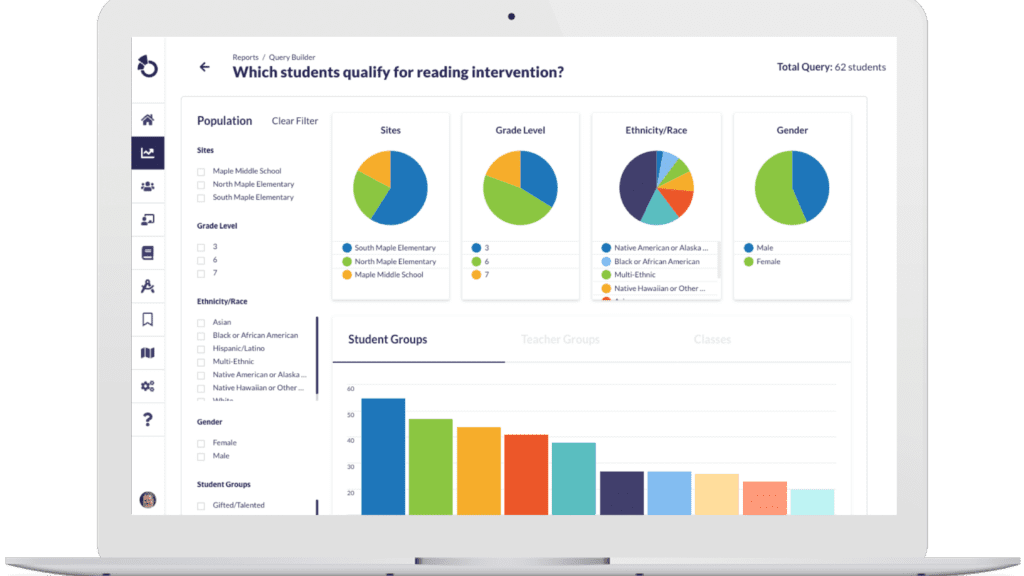
Otus brings assessment, data, MTSS, progress monitoring, standards-based grading, and reporting into one platform, giving educators a crystal clear view of each student.
With Otus AI, educators can also spot patterns and make sense of student data with the click of a button. For teachers, that means less time piecing information together across disconnected tools. For school and district leaders, it means greater visibility into what students need and whether support is working.
Precision learning is still an emerging term, but the need behind it is far from new. Educators have always needed better ways to understand student learning and provide evidence-backed, targeted support.
Otus helps make that work more connected and easier to sustain.
Precision learning: Just a buzzword, or the future of K–12 education?
It’s safe to say precision learning is more than a trend. It reflects the larger shift in K–12 education toward more connected systems of support and more responsive instruction.
As AI becomes more common in education, the most effective uses will likely be those that strengthen educator decision-making and help schools act faster on student needs.
The term is new, but the goal is not.
Every student deserves support that is on time and that moves the needle. Precision learning gives schools a framework for making that happen at scale.
Request a demo!
See exactly how Otus can help your school accelerate student growth and improve student outcomes – all while saving educators time.