

Aug 6, 2026
 How New Jersey schools can bring their vision for whole-child success to life with connected data and collaborative action.
Every day, New Jersey educators work to meet the academic, behavioral, and social-emotional needs of their students. The New Jersey Tiered System of Supports (NJTSS) was created to make that process more consistent and equitable. But teachers know how hard it can be to manage multiple systems, track interventions, and ensure every student gets what they need.
The framework is solid, but connecting all the supports under NJTSS can feel like fitting puzzle pieces together without the picture on the box. Educators need more than a checklist; they need clear visibility into student data, tools for collaboration, and a way to move from information to action.
Understanding NJTSS: A Roadmap for Equity and Student Success
NJTSS is New Jersey’s approach to a Multi-Tiered System of Supports (MTSS). It provides a structure for meeting the diverse needs of students through three tiers of instruction and intervention:
- Tier 1: Universal supports for all students
- Tier 2: Targeted interventions for some students
- Tier 3: Intensive, individualized interventions for a few students
Each tier represents supports that incorporate core programs and interventions to meet students’ academic, behavioral, social-emotional, and health-related needs, which can vary in intensity across the different levels. When implemented effectively, NJTSS creates equitable access to learning by ensuring every student is seen and supported.
Where Schools Shine and Where They Get Stuck
Educators are deeply committed to supporting every learner. The challenge isn’t effort; it’s bandwidth, and monitoring the students and tracking the data isn’t always straightforward. Too often, schools juggle various systems and manual processes that make it hard to see the whole picture.
- Data lives in separate tools for assessment, behavior, and attendance
- Teachers track progress in spreadsheets or forms
- Specialists manage intervention notes in different systems
- Families may only learn about progress during parents/teacher conferences
This fragmentation creates gaps that even the best teams struggle to close. Teachers want to spend more time helping students and less time chasing the data.
What Happens When NJTSS Works
When NJTSS runs smoothly, everything is meant to be connected. Educators can quickly spot which students need support and know exactly what strategies are already in place. Intervention teams can meet with confidence, using real-time data to adjust plans, and families stay informed and involved.
The result? Fewer missed opportunities, stronger collaboration, and more students experiencing steady growth. When educators have a clear, unified view of student progress, they can focus on teaching rather than troubleshooting systems.
Turning the NJTSS Framework Into Action
The real challenge of NJTSS isn’t understanding the framework; it’s putting it into motion. Educators already know the importance of tiered supports, progress monitoring, and data-driven decision-making. What makes implementation successful is consistency, communication, and shared responsibility across every layer of a school community.
To make NJTSS work day to day, many schools are focusing on a few key practices:
- Start with Clarity: Establish a common language and expectations around what Tier 1, 2, and 3 supports look like in your district. When everyone defines “support” the same way, collaboration becomes smoother.
- Create Routines for Data Review: Regular team meetings to look at benchmark, behavior, or attendance data help catch trends before they grow into challenges. Even short, consistent check-ins can make a difference.
- Center on Early Intervention: The earlier students are identified for additional support, the more successful interventions become. NJTSS gives schools a structure to do this, but timing and communication are key.
- Keep Families Informed: Progress feels more meaningful when families understand the goals, strategies, and successes happening behind the scenes.
When these routines become habits, NJTSS evolves from a compliance requirement into a shared system of care that reflects how teachers naturally work, collaboratively, reflectively, and with students at the center.
How Otus Helps: Connecting the Pieces of NJTSS
Otus supports these NJTSS priorities by bringing together academic, behavioral, and social-emotional data in a single platform. Educators can easily view student progress, collaborate on interventions, and share insights with families, all within a system designed by teachers, for teachers.
When everything is connected, NJTSS becomes more than a framework; it becomes part of everyday practice. The sections below highlight how New Jersey schools can strengthen key components of NJTSS through unified data and collaboration, including:
- Early Literacy and Intervention
- Equity and the Whole-Child Support
- Collaboration and Reporting
Together, these areas show what NJTSS looks like in action and how a connected system like Otus helps make it work for every learner.
Early Literacy and Timely Interventions
New Jersey has placed a strong emphasis on early literacy, requiring districts to implement screening, monitoring, and targeted intervention for students in the early grades.
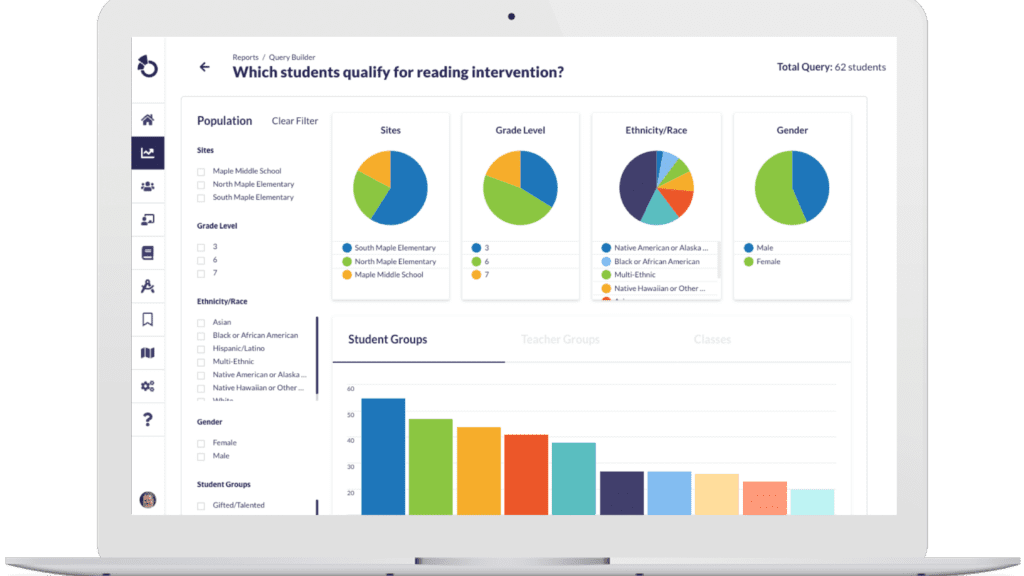
Otus supports these efforts by integrating literacy assessments, such as Acadience and other district benchmarks, into one dashboard. Teachers can quickly identify which students are meeting expectations, which may need more support, and how interventions are performing over time. This helps teams act before small gaps become larger challenges.
For instance, a reading specialist might notice through Otus that a group of second graders is showing slower progress on decoding skills. That insight allows the team to create a Tier 2 intervention group, monitor progress every few weeks, and adjust instruction as needed, all while keeping administrators and families in the loop.
It’s a faster, more transparent process that keeps the focus where it belongs: on student growth.
Keeping Equity and the Whole Child at the Center
Equity is a defining principle of NJTSS. It’s not just about interventions, but about ensuring every student has the right support, academic or otherwise, to succeed.
Otus makes it easier for schools to see the whole picture. Educators can explore patterns across subgroups, compare academic and non-academic data, and identify opportunity gaps that may not be visible when information lives in separate systems.
With unified data, teams can identify trends across student groups, track progress, and take early action to close gaps. The platform empowers educators to see patterns that might otherwise go unnoticed and ensure each learner receives the support they need to thrive.
Seeing students as whole individuals helps educators make more informed decisions. And when teachers have clarity, students have opportunity.
Collaboration That Moves MTSS Forward
Strong implementation depends on collaboration. Professional Learning Communities (PLCs) and MTSS teams work best when they can access shared, accurate data and use structured tools to guide their conversations.
Otus makes that process seamless. Teams can meet to review trends, assign interventions, and track follow-up actions in real time. Built-in meeting templates help standardize workflows and keep discussions focused. Between meetings, updates, and notes remain accessible to everyone involved.
For district leaders, this level of transparency simplifies compliance and reporting. More importantly, it helps teams stay aligned around what matters most: student outcomes.
A Single Platform for NJTSS Success
Many platforms offer pieces of the MTSS puzzle. Some specialize in assessment, while others focus on behavior or SEL tracking. Otus brings everything together in one unified platform that works with the tools schools already use.
Unlike systems that require districts to replace their SIS or add new modules, Otus connects with existing data sources and creates a complete view of student learning. It reduces the noise of multiple logins and dashboards, helping educators focus on insight and action instead of navigation.
Building a System That Works for Every Learner
When NJTSS functions as intended, every student has a pathway to success. That vision depends on collaboration, consistency, and connected information. Otus helps New Jersey districts turn that vision into reality by unifying data, simplifying workflows, and making progress monitoring part of everyday practice.
NJTSS defines the framework.
Otus helps make it work for every learner.
Related Resources
Request a demo!
See exactly how Otus can help your school accelerate student growth and improve student outcomes – all while saving educators time.