

Aug 6, 2026
Florida has managed to do something that quite a few states are still working toward: it’s built a strong, statewide foundation for MTSS.
Here’s the gist of it:
- FAST progress monitoring gives districts multiple checkpoints throughout the year.
- Literacy expectations through Just Read, Florida!, RAISE, and Science of Reading legislation have made intervention and progress monitoring a central part of the work.
- Districts across the state have tiered supports in place, intervention programs running, and data conversations happening regularly.
That’s no small feat.
Plenty of states are lagging behind, still asking the question, “How do we get MTSS up and running?” But in Florida, that question has shifted. The framework exists, and the systems are in motion. The work is happening.
Now comes the next phase: understanding what the work is producing.
From building the framework to measuring impact
Every strong system reaches this point eventually. After the framework is built, the focus naturally shifts from “Is this happening?” to “Is this helping?”
For Florida leaders, that means moving from “Are we doing MTSS?” to “Is our MTSS changing student outcomes?”
Most districts can identify which tier a student is in or document which intervention a student received. The next, more crucial step is being able to see whether that support truly changed the student’s trajectory.
Two schools in the same district may use similar intervention programs and see very different results, with some students responding quickly and others continuing to struggle. But without a clear way to connect tier movement, intervention history, progress monitoring, and outcomes, those patterns can be hard to see in time to adjust before the next major assessment window.
Florida’s MTSS infrastructure gives districts an incredible starting point. The next step is about making the system easier to learn from.
3 shifts that define effective MTSS
As Florida districts move into this next stage, three shifts can help leaders see MTSS in a more actionable way.
From placement to trajectory
Tier placement tells teams where a student is right now. But trajectory shows where that student is headed.
A student in Tier 2 who is steadily improving might need something drastically different from a student in Tier 2 whose progress has stalled. Without movement over time, teams are left with a static label. They’re left… wondering. But by looking at the trajectory, they can see whether the current support is enough, if it needs to change, or if a student is ready to move up.
Put simply, educators need to be able to understand student response—and the sooner, the better.
From testing windows to the signals between them
FAST PM1, PM2, and PM3 provide critical checkpoints for Florida schools. Those windows help districts understand progress toward state expectations and make decisions around accountability and instruction.
However, many of the most important decisions happen between those windows.
Waiting until the next major assessment point can mean losing weeks of potential support, which is especially tragic for K–3 learners. Districts need ways to spot smaller signals of progress along the way, whether through local measures or by analyzing intervention data.
The more clearly teams can see what is happening between PM1, PM2, and PM3, the easier it becomes to adjust support before students fall further behind.
From documentation to evidence
Is MTSS working?
To answer that requires looking beyond whether an intervention was assigned and asking more useful questions:
- Which interventions are used most often?
- Which ones are producing measurable growth?
- Are results consistent across schools using the same program?
- Are teams tracking fidelity alongside outcomes?
- When something isn’t working, how long does it take to know?
These questions help districts move from checking boxes to examining evidence. They also make it easier to scale what’s working instead of letting strong practices stay isolated in one classroom, grade level, or school.
5 questions worth asking before next school year
As Florida districts review FAST PM3 results and prepare for the next school year, the strongest planning conversations start with five surprisingly simple questions:
- Can we show tier movement over time, or only current placement?
- Can we see how students responded between FAST windows?
- Can we identify students who need support early enough to change the outcome before PM3?
- Are MTSS outcomes documented consistently enough across schools to compare effectiveness?
- Is our team spending more time gathering and piecing together than acting on it?
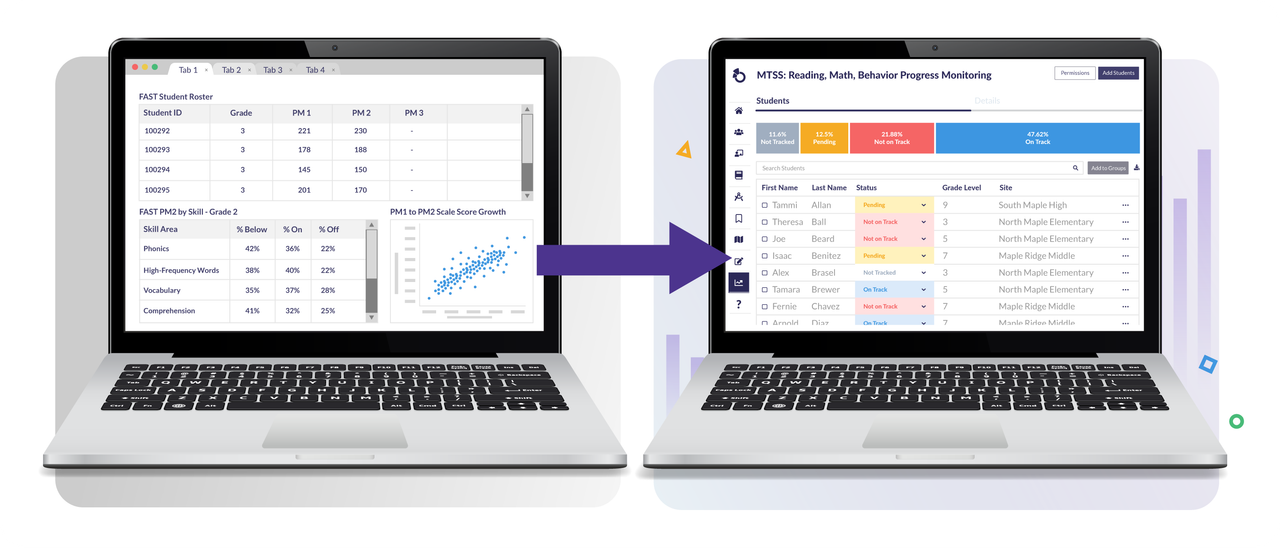
That last question is likely the most revealing. When data lives in multiple systems, teams spend entirely too much time pulling reports, cross-checking spreadsheets, and trying to reconstruct the student story—all while they should be planning. By the time the picture comes together, the window for action may already be feeling tight.
How Otus helps Florida districts move from data to action
When every student data point lives in one place, teams naturally spend significantly less time assembling the story and more time acting on it.
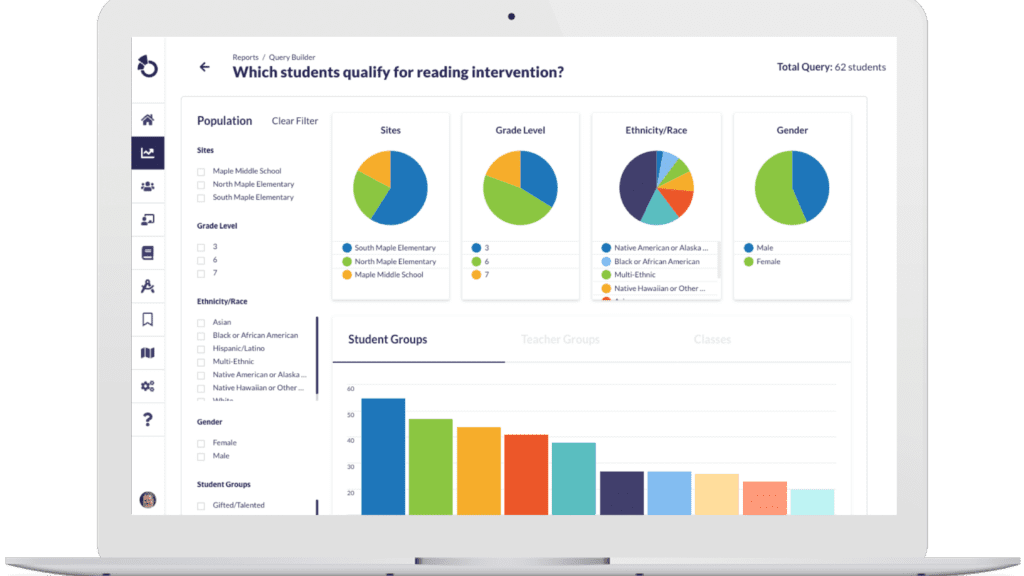
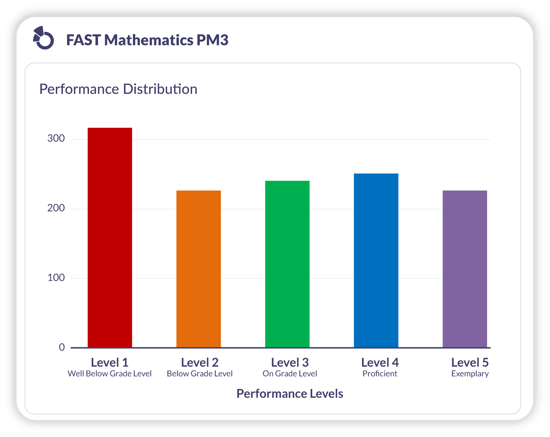 Using Otus, Florida districts can connect FAST results with local assessments, diagnostics, classroom performance, intervention data, and a wealth of other student information to see a complete picture of progress. Built-in MTSS tools help teams track tier movement, document supports, and monitor intervention outcomes over time. Dashboards and reports make it easier to compare trends across schools, grade levels, classrooms, student groups, and programs.
With Otus AI, teams can ask questions about their data in plain language and immediately surface patterns, helping leaders determine clear next steps.
That’s particularly helpful during the spring and summer planning windows. PM3 results are in, and the next school year is fast approaching. Leaders need to know what changed, what worked (and why), and what needs attention before students walk through the doors in the fall.
The natural next step for Florida MTSS
The infrastructure and information exist. The opportunity now is to make that data easier to learn from and act on, not in individual classrooms, but across the district.
Schools that can answer “Is this working, and how do we know?” will be much better prepared for whatever comes next, from literacy and math expectations to broader conversations about student growth and readiness.
Florida built an amazing framework, one they should be proud of. Now, district leaders have the chance to take it across the finish line by turning that framework into a clear, fast, repeatable process for improving outcomes.
Related Resources
Request a demo!
See exactly how Otus can help your school accelerate student growth and improve student outcomes – all while saving educators time.