

Sep 30, 2026
If It Saves Money but Fails Students, It Is Not a Win
Originally published on District Administration.
Districts are tightening budgets, cutting programs, and scrutinizing every line item—all while serving more students with greater needs. To navigate this pressure, education leaders are increasingly turning to K-12 analytics to guide instructional, financial, and policy decisions. The promise is real, but so is the risk of losing sight of what, and who, actually matters.
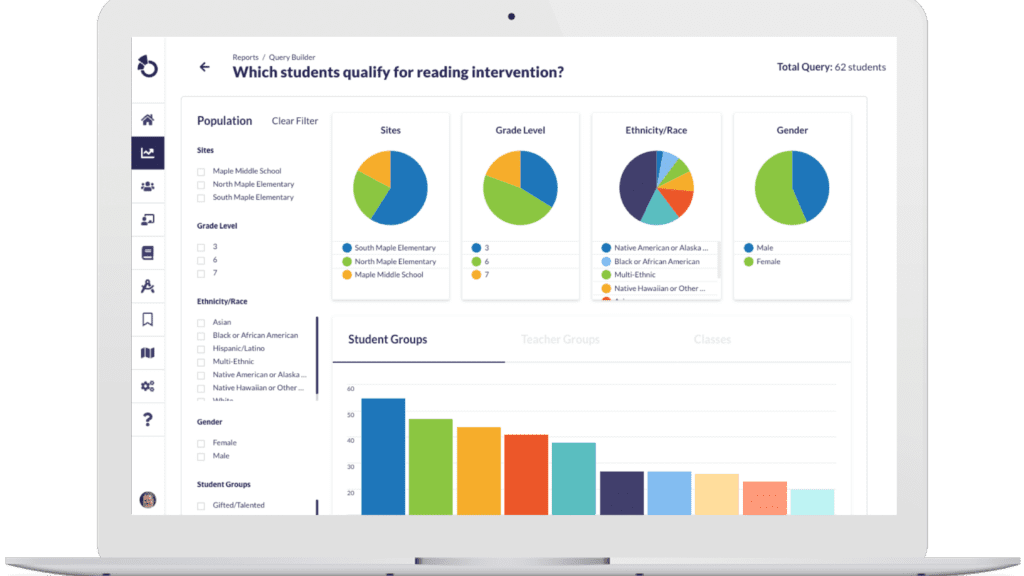
Used well, K-12 analytics is a powerful tool for school leaders. It moves beyond one-dimensional test scores to reveal patterns across performance, behavior, and engagement, giving educators a far more accurate picture of what is actually happening in their schools. In the classroom, real-time insights turn into immediate action, helping teachers reach the right student with the right support at the right time.
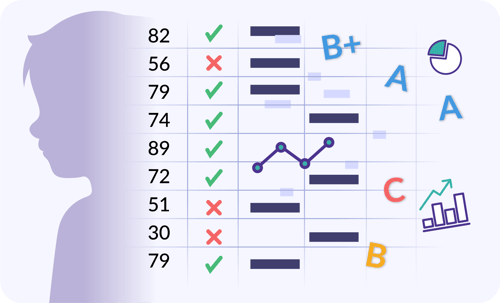 Comprehensive data also strengthens collaboration across teams, ensures instruction stays aligned with standards, and makes targeted intervention far more precise. Schools are also putting predictive analytics to work, identifying at-risk students before challenges escalate and redirecting resources toward the programs that are proven to move the needle.
It is easy to get excited about analytics from a boardroom or a budget meeting. But the further decision-makers sit from the classroom, the greater the risk of losing the child in the data — where scores and savings take priority over the well-being of each student.
The need to control costs and pursue best practices cannot outweigh the human side of K-12 education. The goal is not to choose between fiscal responsibility and student well-being; it is to make sure the data driving those decisions reflects both. And right now, too much of that data is leaving out the most important variable, the whole child.
Do not lose the child in the data
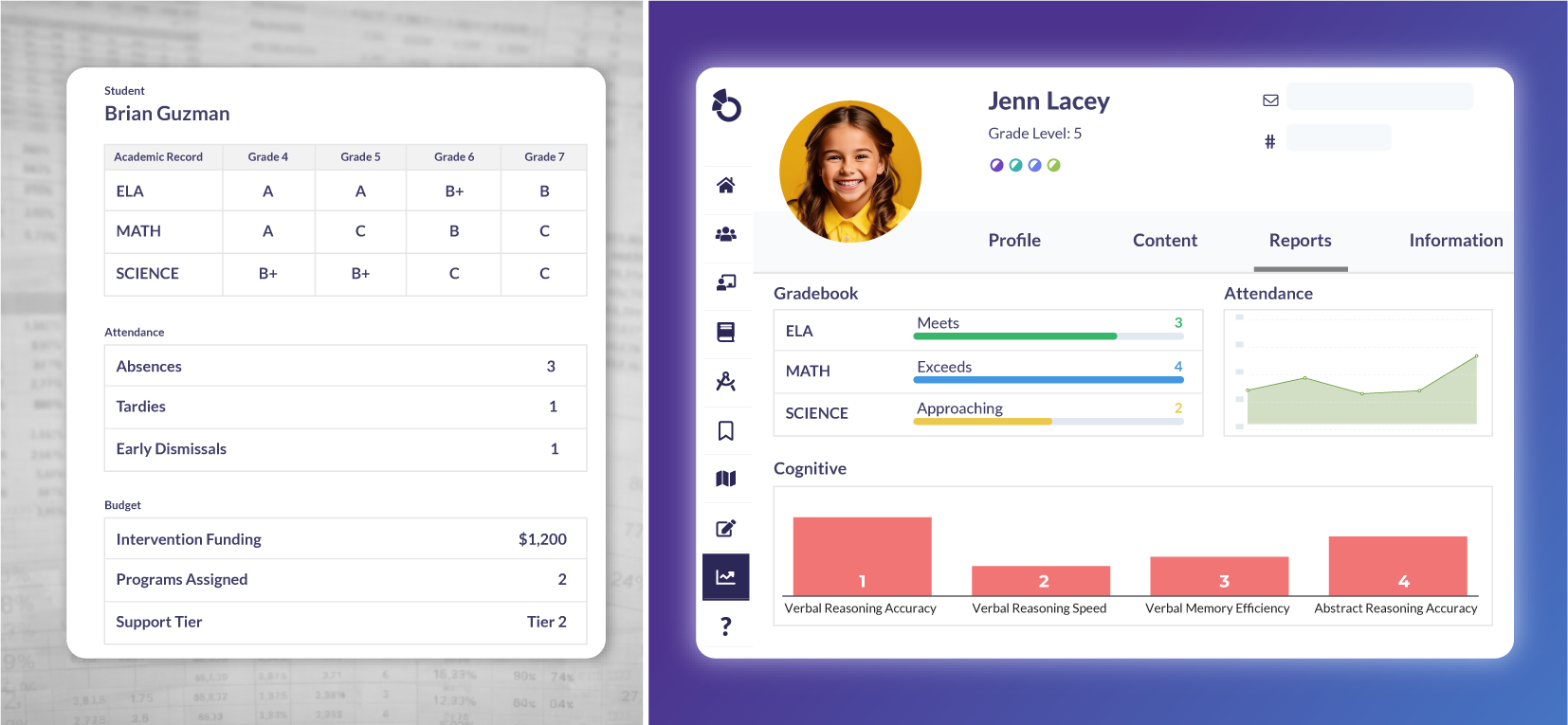
U.S. public schools enroll nearly 49 million students, each of whom generates thousands of pieces of information per year. When K-12 analytics platforms synthesize the thousands of data points each student generates every year, it is important to make sure a whole-child perspective is included before the analysis happens. Otherwise, key factors that directly influence academic achievement such as social-emotional, behavioral, and cognitive characteristics will be overlooked or excluded.
For instance, cognitive assessment of students’ strengths and needs can explain between 37% and 55% of variation in their achievement across math, reading, and science scores. And a recent analysis of 424 experimental studies looking into social-emotional learning programs in 50 countries confirmed participating students demonstrated increased academic achievement and performed better on attendance and engagement.
Classroom teachers bring something no analytics platform can replicate, including years of insight, relationships, and empathy that give data its proper context. But as decisions move further from the classroom, those human insights are too often overruled by numbers that tell only part of the story.
The temptation to be penny-wise but pound-foolish
School boards and administrators are under real pressure. With flat funding anticipated at the federal and state levels, per-pupil spending is often the first place leaders look for flexibility, as it feels more controllable than facilities costs or debt financing.
But the math rarely works out the way it looks on paper. Nearly 80 percent of per-pupil spending goes toward staff salaries and benefits, and those costs are rising faster than instructional spending. Cutting your way to savings through instruction is a difficult path, and the people closest to students will tell you exactly where it leads.
What analytics often misses is the full picture of a student's life outside school. When budgets get cut, the families most affected are frequently dealing with the same economic stress driving those cuts (job loss, food insecurity, housing instability, etc.). Research confirms that these kinds of hardships create real cognitive barriers that directly impact how a child learns and performs.
Predictive models built on historical data have informed school decisions for decades. But today's tools can incorporate social-emotional, behavioral, and environmental factors that offer a far more complete picture. A model that ignores that fuller view is not incomplete. It is a blind spot.
Data as a foundation for safe and supportive environments
Creating a school culture where students thrive goes beyond academics. It requires strong relationships, social awareness, confidence, resilience, and a sense of belonging.
Teachers understand that effective instruction is a two-way street. When underlying challenges go unaddressed, engagement suffers and so does learning.
The role of data is not to replace that human understanding, but to strengthen it. When systems reflect the full picture of a student—including academic, behavioral, and social-emotional factors—educators and families can work together to support growth and celebrate progress.
There is real promise in the continued evolution of K-12 analytics. But that promise is only realized when data helps us see students more clearly, not when it reduces them to what’s easiest to measure.

Chris Hull
President and Co-founder
Otus
As a former educator, Chris understands both the challenges and the rewards of the classroom. He believes every student should have the opportunity to succeed, and that begins by equipping educators and school communities with the tools and data they need to make a meaningful impact on students’ lives.
Request a demo!
See exactly how Otus can help your school accelerate student growth and improve student outcomes – all while saving educators time.