

Sep 3, 2026
In some schools, test preparation is often treated like a separate season.
There’s the regular flow of instruction, and then there’s the stretch before state testing, or before students sit for ACT, SAT, or AP exams, when everything suddenly shifts into preparation mode. The pressure rises, and the questions pile up, while teachers do their best to connect the dots (and quickly).
But that approach leaves too much to chance.
What will the test really feel like for students? Are they really ready for the level of rigor they are about to face? What can teachers adjust now, and will it even make a difference?
These are fair questions. They’re also a sign that test prep is being asked to do too much too late.
Not surprisingly, more educators are starting to approach this work differently. Instead of treating test preparation like a last-minute event, they are building it into a more connected view of teaching and learning. Practice becomes more meaningful, results become more useful, and ultimately, readiness becomes something schools can build over time.
When practice reflects the real test
If you’re uncertain about test prep, it might be because practice does not always look or feel like the real thing.
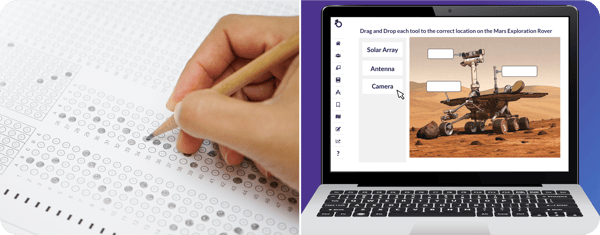
Students can review standards and complete assignments tied to tested skills—they can even take practice tests—but if the format, structure, and level of rigor don’t reflect the actual assessment experience, there’s still a disconnect between what they’re doing in class and what they’ll face on the big day.
That disconnect is nothing to shrug off, either.
When students are surprised by a question type or slowed down by an unfamiliar format, the challenge becomes one of familiarity and confidence. Practice never quite prepared them for the real test.
That is precisely why aligned practice is so important.
When assessments mirror the real testing experience, students have repeated opportunities to work through the kinds of tasks, expectations, and formats they will encounter later. That can reduce anxiety and build confidence, helping students focus more fully on showing what they know.
This becomes even more important when schools are preparing students for more than one kind of assessment. State exams, college entrance tests, and Advanced Placement coursework may serve different purposes, but all of them ask students to apply skills in rigorous and specific ways. Practicing those demands can help students feel more prepared across the board.
Results that help teachers respond
Of course, realistic practice is only part of the equation.
The bigger question is what schools are able to do with the results.
.png?width=500&height=213&name=Image-Conference%20(1).png)
Too often, practice assessments spit out a score and not much else. Teachers can see whether a student performed well or struggled, but they’re still left asking what happened, why it happened, and what to do next.
That’s why the most useful assessment data goes beyond performance and helps to explain what students need.
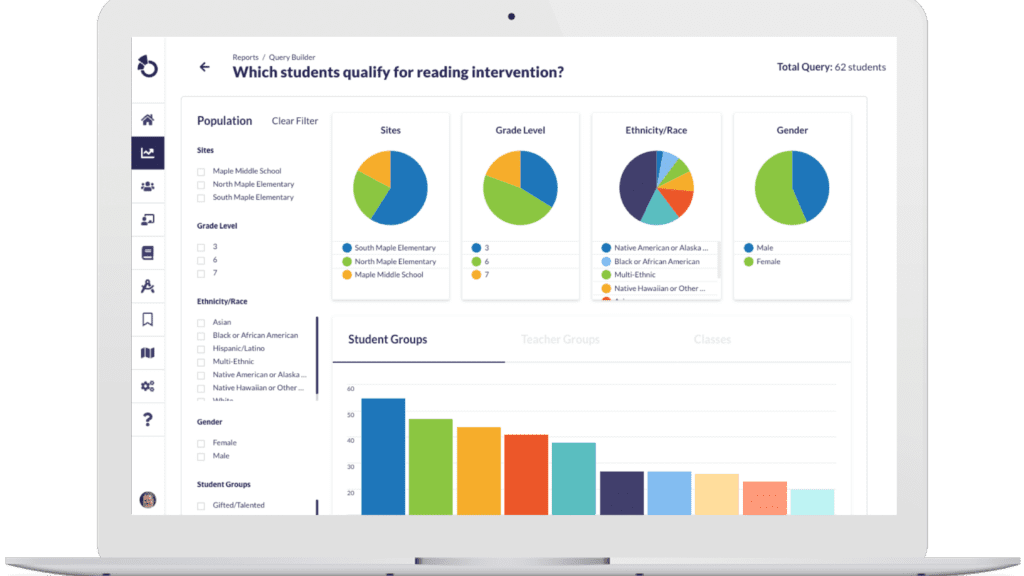
Results should help teachers identify skill-level strengths and gaps while giving leaders visibility into patterns across classrooms, grade levels, and student groups. Teams also need a way to turn what they see on the screen into instructional decisions that feel timely and grounded.
When results show educators which standards need reinforcement, where students may need targeted support, and which trends are showing up across the district, assessment becomes a key part of the instructional cycle.
And when that data lives alongside other student performance indicators, it becomes significantly more useful. Practice results take on new meaning when viewed next to state assessments, growth measures, attendance patterns, or intervention data. Instead of trying to tell the whole story with one test, schools can use multiple signals to get a truer read on readiness and act with greater confidence.
Connecting state readiness and college readiness
Many districts face another challenge: the disconnect between state readiness and college readiness.
State assessments are tied to accountability, performance reporting, and district goals. ACT, SAT, and AP preparation is often handled through separate plans, tools, or conversations. But the skills behind these assessments are not as separate as the systems around them sometimes make them seem.
Strong reading comprehension, mathematical reasoning, and applying knowledge in unfamiliar contexts are not one-test skills. They support success across multiple measures of readiness. When that clicks for schools, test preparation can go from a set of competing demands to a powerful unified effort.
Educators' plates are already full without having to prepare students for every assessment in isolation. A more connected approach helps schools focus on the broader skills that matter most, then use aligned practice to help students apply those skills in settings that resemble the real experience. That can reduce redundancy and strengthen vertical alignment, so readiness feels more connected from one grade band to the next.
Good test prep should help educators and students avoid surprises in the spring. But its bigger potential is helping schools build a clearer path toward long-term student success.
What aligned assessment looks like in practice
So what does this actually look like when it’s working well?
Practice that does not interrupt instruction, but supports it; assessments that are aligned closely enough to the real thing that students know what to expect, and teachers gain more meaningful insights from the results. A system where practice helps shape the instructional response.
It also looks more connected.
Instead of using one tool for state test prep, another for college readiness, and still another to review performance data, educators thrive from a more unified experience. They can administer aligned practice, review results, identify learning gaps, and keep an eye out for larger patterns, all without constantly switching tabs and contexts. That kind of visibility makes it easier to spot trends early and respond before the stakes get higher.
.png?width=500&height=219&name=Image-PLC-06%20(1).png)
This is also where breadth matters, because “readiness” is not one thing. Schools may need support for state assessments in elementary and middle grades while also helping older students prepare for college entrance exams or Advanced Placement coursework. When aligned assessment options span those needs, districts are in a stronger position to build a connected strategy instead of a patchwork one.
Preparing students for one test at a time is the old way. The new standard is to build a stronger bridge between daily instruction, short-term readiness, and long-term opportunity.
How educators make this work in their district
For many schools, this becomes more practical when aligned assessments are delivered in a place where results are easier to see, connect, and act on.
With pre-built assessments available in tools like Otus, schools can provide practice that reflects state assessments as well as college and career readiness measures like the ACT, SAT, and AP. That gives students a more authentic practice experience while giving educators a clearer view of how performance is taking shape over time.
State Practice Tests Available
Alabama - ACAP
California - CAASPP / SBAC
Colorado - CMAS
Georgia - Georgia Milestones
Illinois - IAR
Indiana - ILEARN
Kentucky - KSA
Massachusetts - MCAS
Mississippi - MAAP
Missouri - MAP and EOC
New York - NTSTP
Oklahoma - OSTP and CCRA
Pennsylvania - PSSA
Utah - RISE
ACT®, SAT®, and Advanced Placement® Tests
ACT® +
ACT® Modeled Assessments
PreACT® 8/9 Modeled Assessments
PreACT® 10 Modeled Assessments
SAT® +
SAT® Modeled Assessments
PSAT® 8/9 Modeled Assessments
PSAT® 10 Modeled Assessments
Advanced Placement®
AP® English Language & Composition
AP® Literature & Composition
AP® Calculus AB
AP® Statistics
AP® Biology
AP® Chemistry
AP® Environmental Science
AP® United States History
AP® World History Modern
AP® U.S. Government & Politics
AP® Psychology
AP® Macroeconomics
AP® Human Geography
Just as important, the results do not sit in isolation.
Because assessment data lives alongside other student performance indicators in Otus, educators can look beyond a single score and see a complete picture. They can compare results across assessments, instantly identify trends, connect practice data to other measures of student progress, and, ultimately, make smarter decisions about what support may be needed next. For district leaders, that also makes it easier to communicate readiness trends clearly to school teams, boards, and communities.
With Otus, aligned assessment becomes a more practical, more connected way to support readiness.
Less guesswork, more clarity
Test prep will always carry some pressure. At the end of the day, the stakes are real, and educators care deeply about helping students feel ready.
But that doesn’t mean the process has to feel as uncertain and disconnected as it so often does.
When practice reflects the real test, when results genuinely help teachers make their next move, and when state and college readiness are treated as part of the same broader goal, schools can move forward with so much more clarity. They can spend less time wondering what students will face and reacting after the fact, and more time using what they know for sure to support students before test day arrives.
And that is the shift that is taking shape in 2026: test prep that is connected to the work educators are already doing every day.
Related Resources
Request a demo!
See exactly how Otus can help your school accelerate student growth and improve student outcomes – all while saving educators time.