

Sep 30, 2026
Too Many Assessments, Not Enough Answers: Why Illinois Classrooms Need Data That Works
By: Otus Team
Assessment Overload: When More Data Brings Less Clarity
For decades, educators have embraced the idea of using data to drive instruction—with the ultimate goal of improving student outcomes. And data is powerful. When used well, it can illuminate student needs, inform instructional decisions, and lead to meaningful student growth.
The challenge in Illinois schools is not a lack of data. It is how that data is organized, accessed, and used. Many find themselves swimming in data while starving for clarity.
Across districts, educators rely on a growing mix of assessments and tools, from i-Ready, IAR, and MAP Growth to local benchmarks and progress monitoring systems. Individually, these tools provide valuable insight. Together, they often create fragmentation.
Understanding student performance is rarely a single click. Teachers log into one platform for assessment results, another for grades, and another for progress monitoring. Student by student, data is exported, copied, and pieced together just to form a complete picture of learning. That process repeats across classes, grade levels, and benchmark windows.
At a small scale, this is inefficient. At a large-district scale, it’s unsustainable.
The instructional impact is significant. When insight depends on manual data gathering, responsiveness slows and opportunities are missed:
- Tier 1 instruction weakens when teachers lack a clear, timely view of what is working and what is not.
- MTSS identification and support are delayed as it takes longer to surface patterns and risk indicators.
- Equity gaps widen when siloed data obscures trends among student groups.
- SEL and behavior supports become reactive, addressing challenges only after they disrupt learning.
In the end, the issue is not the assessment volume. It is the absence of connected systems that turns existing data into timely, actionable insight.
What Connected Data Can Look Like in Practice
This challenge is not theoretical. Illinois districts are actively navigating it, and some are finding ways to move from assessment overload to instructional clarity.
Wood Dale School District 7, a PK–8 district in Illinois, faced a familiar problem. The district was committed to standards-based grading and common assessments, but collaboration was difficult when assessment data lived in too many places. Teachers needed a way to connect standards, assessments, and student progress without adding to their workload.
The district began by using Otus to design and score standards-aligned common assessments. Over time, that work expanded. Student performance data from district and state assessments was brought into one shared system, allowing teams to review results side by side rather than across separate tools.
Today, Wood Dale educators analyze more than a dozen data sources in one place, including MAP Growth, FastBridge, IAR, WIDA ACCESS, and i-Ready. Grade-level and content teams use shared dashboards to identify trends, compare cohorts, and monitor growth across subjects. In the 2024–25 school year alone, nearly 71,000 assessments provided timely feedback that strengthened PLC conversations and instructional alignment.
The shift was not about adding more assessments. It was about making existing data usable, visible, and actionable.
The Shift Illinois Needs: Connected Systems
Illinois districts don’t need more tests—they need smarter systems to make better use of the data they already collect.
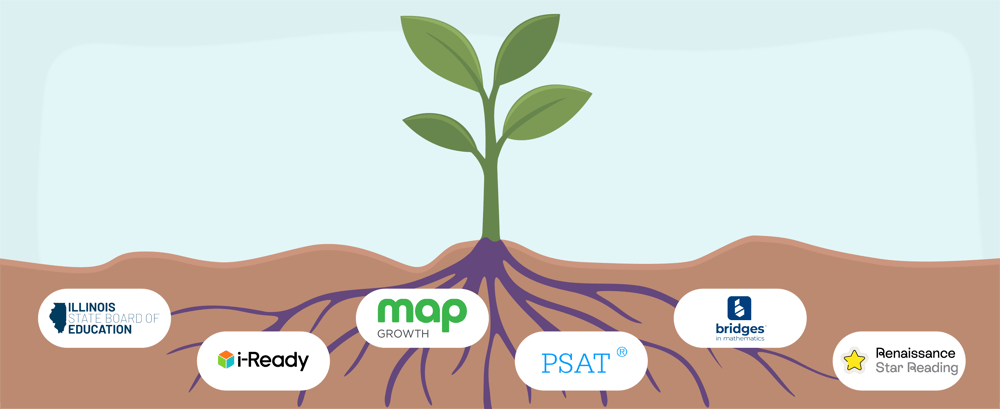
Imagine the time saved when teachers and administrators access a single, centralized platform that brings together every third-party assessment (Star Reading, SAT, DESSA, MAP Growth, and more)—along with standards-aligned assessments created by educators themselves. No more toggling between dashboards. No more piecing together partial stories.
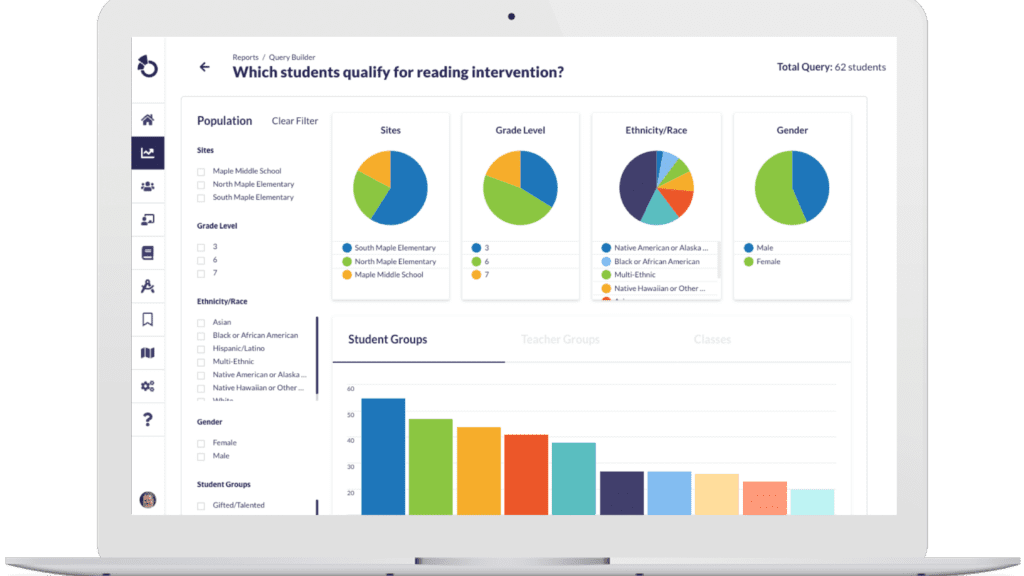
Now imagine the clarity that emerges when trends across ELA, Math, and SEL are visualized in real time. Instructional teams can quickly spot patterns, align strategies, and respond with confidence. To prepare for PLCs, MTSS reviews, or parent-teacher conferences, educators often spend hours assembling a clear picture of student performance—what’s working, what isn’t, and what comes next. With the help of AI, summaries automatically highlight strengths, gaps, and suggested next steps, teachers reclaim time and gain a communication edge.
When data works for educators, it accelerates action instead of slowing it down. And when assessment data connects, teachers can focus on what matters most: student growth.
A Smarter Way Forward: Otus
Otus provides one secure, FERPA-compliant platform that brings all your assessment data together—without the clutter and complexity of legacy SIS tools like Skyward, PowerSchool, or Aspen.
By integrating third-party assessments, district benchmarks, and teacher-created formative assessments into a single, clear view, Otus helps Illinois educators shift from managing tests to maximizing instruction.
When insight replaces overload, educators gain the clarity needed to act early, teach intentionally, and help every student thrive.
Related Resources
Request a demo!
See exactly how Otus can help your school accelerate student growth and improve student outcomes – all while saving educators time.