

Sep 3, 2026
Most schools want students to actively participate in their own learning or take ownership of their learning. To encourage student agency, they offer more choice, add goal-setting routines, and place value on independence.
But these steps alone don't build agency. Students also need the thinking skills to use that choice well. Educators need a way to see those skills and develop them when needed. That's where cognitive data comes in.
What Is Student Agency, and Why Does It Matter in K-12 Education?
Student agency is a learner's ability to take purposeful action in their own learning. Overarching goals of student agency are for students to set goals, make decisions, monitor progress, and know when to adjust when something isn't working.
Why do schools want to develop student agency? When students are active participants in their learning, those students tend to see high levels of:
- Engagement. Students who feel ownership are more likely to show up and stay involved.
- Persistence. They keep going when work gets hard.
- Academic growth. They use strategies instead of waiting to be told what to do.
- Readiness. College and careers reward people who can plan, prioritize, and self-direct.
Luckily, agency isn't a personality trait. It's a set of skills. And these skills can be taught if they aren’t currently present.
How Does Executive Function Affect Student Agency?
Executive function is the set of mental processes that help people plan, focus, remember instructions, and manage multiple tasks. It's the engine behind self-direction.
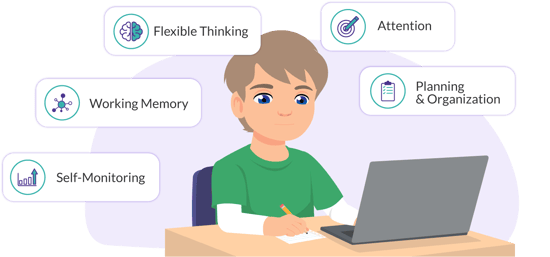 Executive function connects directly to student agency:
- Goal-setting depends on planning and reasoning.
- Getting started depends on initiation and attention control.
- Staying on track depends on working memory and self-monitoring.
- Recovering from setbacks depends on flexible thinking.
- Managing time depends on organization and prioritization.
When executive function is strong, students can act on their intentions. When it's still developing, intentions stall.
The good news: executive function responds to targeted support. But support works best when it's matched to the specific skill that needs it. The first step is knowing which students need support with executive function skills.
Why Do Some Students Struggle to Exercise Agency, Even With More Choice?
More choice sounds empowering, but for some students, it's overwhelming.
Consider a student handed an open-ended project with a menu of options. They stare at the list and pick the first one. To do it well, they would have to:
- Hold the requirements in mind
- Pick a direction
- Plan the steps
- Start without a prompt
- Track their own progress
- Adjust when they get stuck
Every one of those steps draws on cognitive skills. If those skills are still developing, the student may freeze, avoid the task, or default to the easiest option. Educators often read this as low motivation. It's frequently a skills gap. Without cognitive data, it's hard to tell the difference.
Student agency it runs on cognitive skills such as:
- Working memory: Holding instructions and ideas in mind while working through a task.
- Attention: Staying focused and filtering out distractions.
- Flexible thinking: Shifting approaches when the first one fails.
- Planning and organization: Breaking a big task into steps and sequencing them.
- Reasoning: Making sense of new information and solving unfamiliar problems.
- Processing speed: Taking in and responding to information efficiently.
A student can want to take charge of their learning and still lack one or more of these. That gap explains a lot. Educators benefit by seeing gaps in these skills so they can utilize strategic supports to develop them where needed.
How Do Cognitive Insights Support Self-Regulation and Self-Efficacy?
Both self-regulation and self-efficacy are important for building student agency in K-12 schools and can explain why some students are more successful in educational settings where choice and agency are valued. Self-regulation is managing your own attention, emotions, and behavior to reach a goal. Self-efficacy is believing you can succeed at a task through effort and strategy. Cognitive insights are critical to supporting these:
For self-regulation, cognitive insights:
- Help students recognize when their focus or working memory is under strain
- Give teachers a basis for suggesting specific strategies, like chunking tasks or using checklists
- Make it easier to build routines that match how a student actually works
For self-efficacy, cognitive insights:
- Name strengths students can point to with confidence
- Reframe struggle as a skill that's still developing, not a fixed limit
- Replace vague feedback ("try harder") with concrete steps
- Let students see progress over time
Gaining access to cognitive insights is a key step to successfully developing student agency in all students. These insights are needed so a student can confidently say, "I do better when I break this into parts,"; and that's student agency in action.
How Can Cognitive Assessments Help Build Student Agency?
Cognitive assessments are critical for developing strong student agency because they make invisible skills visible.
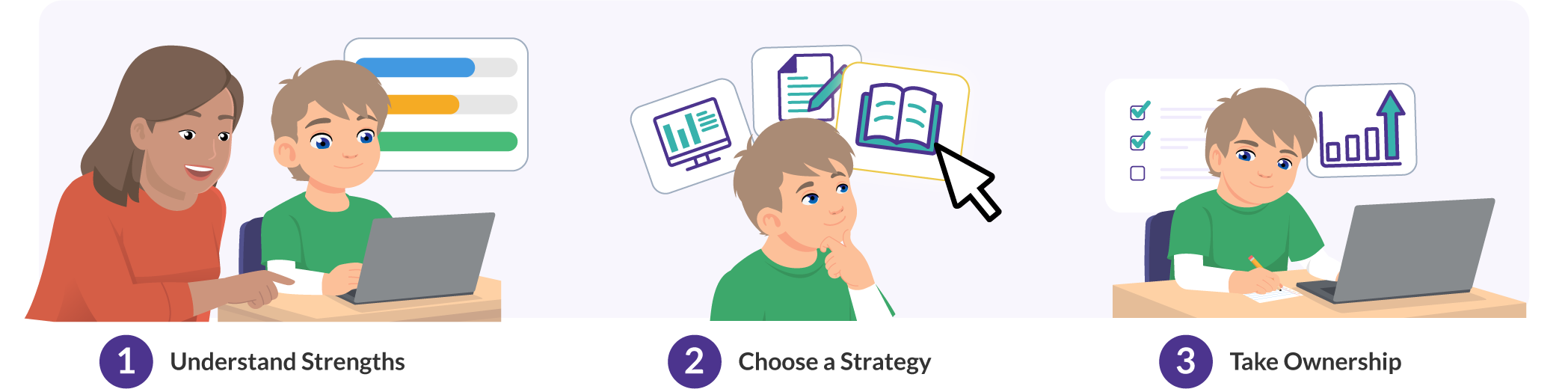 Grades and academic test scores show what a student has learned. They don't show how the student thinks or why learning comes easily in one area and slowly in another.
A cognitive assessment fills in that picture. It can help educators and students understand:
- Strengths: Where a student's thinking is already strong and can be leveraged.
- Growth areas: Which skills may be making school harder than it needs to be.
- Learning patterns: How a student tends to approach new material.
- Supports that fit: Strategies matched to the student, not to a generic profile.
Insight into students' cognitive skills finally provides students with an accurate understanding of how they can be successful. A student who understands how they learn can make better decisions about how to learn.
How Can Districts Use Cognitive Data to Support Student Agency at Scale?
Student Agency can't be a program that lives in one classroom, with one teacher. To reach every student, districts need a comprehensive plan that includes shared language and shared data.
A practical approach can look like this:
- Start with a common baseline. Assess cognitive skills across grade levels so every educator works from the same picture.
- Pair cognitive data with academic data. Look at skills alongside grades, benchmarks, and attendance to find root causes.
- Equip teachers with strategies. Data only matters if it leads to a next step in the classroom.
- Bring students into the conversation. Share strengths and goals in age-appropriate ways so students own the plan.
- Support MTSS and intervention teams. Use cognitive insights to match supports to need and monitor whether they're working.
- Track growth over time. Revisit data to see what's changing and adjust.
The challenge at scale is rarely collecting data. It's making that data usable. When information sits in separate systems, patterns get missed, and students don’t always meet their full potential.
How MindPrint and Otus Fit In
To successfully build student agency district-wide, schools need the right data, in one place, in a form educators can act on. MindPrint and Otus help districts achieve that.
MindPrint captures the cognitive skills that matter most for learning, including:
- Complex Reasoning
- Memory
- Executive Functions
- Processing speed
MindPrint provides educators (and students!) clear strengths and growth areas for each student, along with strategies they can use right away. This gives schools an evidence-based starting point for conversations with students, colleagues, and families about how each student learns.
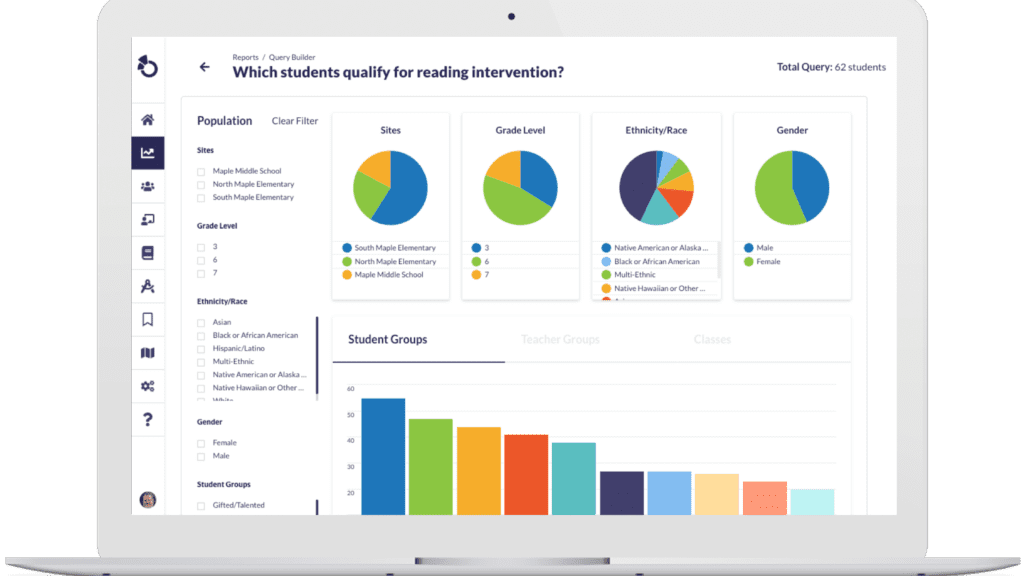
Otus helps schools bring that information together with everything else they know about a student. Assessment results, academic performance, and other student data can live in one platform, so educators don't have to piece together a story from separate tools.
Together, MindPrint and Otus help schools:
- See the whole learner, not just test scores
- Spot patterns earlier
- Match supports to the real need
- Share insights across teachers, teams, and schools
- Help students understand their own strengths and take ownership of their growth
Student agency starts with students knowing how they learn. Cognitive data gives them, and the adults who support them, a concrete place to begin.
Request a demo!
See exactly how Otus can help your school accelerate student growth and improve student outcomes – all while saving educators time.