

Oct 27, 2026
 What do we want for students by the time they walk across the graduation stage, and are our systems built to get them there?
In this panel discussion, district leaders and education systems experts examined the gap between the outcomes we say we want and the systems currently in place to produce them, from accountability models to classroom practice.
Panelists moved from big-picture vision to everyday execution, covering:
- What skills does a successful student and eventual graduate need to thrive post-secondary
- What it would take to build accountability systems aligned to real purpose
- How measurement and effective classroom strategies can honor individual learning paths while still producing comparable results
- How leaders can commit to a philosophy and sustain it operationally long-term
If your students aren’t reaching the outcomes you’re aiming for, this is where that conversation starts. Watch the full session:
3 Lessons From District Leaders on Redefining Assessment
Compliance is where you start
Every system needs compliance mechanisms, because they show whether limited resources are reaching students. The trouble starts when compliance becomes the goal. People work toward what they’re measured on, so a single end-of-year test can end up setting the agenda for an entire year. A district can be in full compliance and still fall short for its students, and a student can graduate without gaining the education they need to pursue the life they want.
“Compliance seems to be the goal in too many instances where compliance really should be the floor, and the sky is the limit in terms of student learning, in terms of student potential, and in terms of the potential of the teaching and learning system as a whole; compliance cannot be the goal. Compliance needs to be where we start and build from. And unfortunately, unless that is intentionally, deliberately, and regularly articulated by leaders, compliance does end up being the goal. We have too much evidence that districts can be in wonderful compliance and still not be serving students, staff, and the community that we are all intended to serve.”
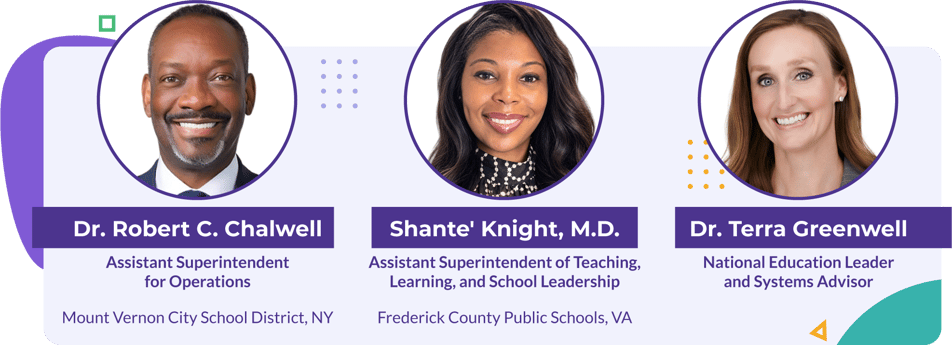
Dr. Robert C. Chalwell
Assistant Superintendent for Operations
,
Mount Vernon City School District (NY)
Agree on what counts before you measure it
It’s hard to decide what to measure until a community agrees on what students should know and be able to do. Parents, educators, policymakers, and students each bring a different view, and without a shared definition, schools might default to what’s easiest to measure. One way forward is to agree on common competencies that serve students on any path after graduation, whether that’s enrollment, enlistment, employment, or entrepreneurship. And once the goal is clear, the evidence has to match it, which takes more than a single data point or a single way for students to show what they know.
“Learning is not a straight line. And if you've ever taught a classroom full of students, you know they all bring unique backgrounds and sources of knowledge. If you've ever read about the knowledge gap, we know that one of the inherent design flaws with a standardized testing system is that if a student doesn't have knowledge of that content or that resource, it obviously puts them behind in some way. So I think it's very important when we're thinking about durable skills and competencies to lean into the things that we as a community, we as a district, even we as a nation have said are the things you need to be successful in life, in adulthood, as a human being, as a productive community member in our society, and then lean into that.”
Dr. Terra Greenwell
National Education Leader and Systems Advisor
,
Make the shift part of how you do school
Change sticks when it’s built into the way a school operates. That starts with the conditions teachers work in. Deeper learning is hard to teach in a system that rewards compliance, and teachers need the trust to use their judgment and the time to prepare. Leaders should ask whether a change is necessary before adding it. For example, Frederick County Public Schools in Virginia lists every anticipated initiative in an impact table, along with who each one affects, so leaders can see the total load on staff and decide what to hold back for the year. And support has to continue after the training. Teachers need chances to practice the new approach and get feedback, plus a safe place to ask questions when something isn’t clear.
“One of the things that we are committed to doing here in Frederick County Public Schools is really engaging stakeholder feedback on the front end. So getting our teachers involved, whether it's product selection, whether it's really evaluating the initiatives that we have or we anticipate having for the upcoming school year. And by taking a cumulative look at how many experiences that may come across as new or extra on one or more stakeholders, that allows us to prioritize or reprioritize initiatives, and for some things, that means we don't implement them at all that year. Making change stick really comes down to understanding whether change is necessary and then understanding your division's readiness to change; knowing the community that you serve and the weight that they're already carrying. Because change will stick if people buy in.”
Shante' Knight, M.D.
Assistant Superintendent of Teaching, Learning, and School Leadership
,
Frederick County Public Schools (VA)
Related Resources
Request a demo!
See exactly how Otus can help your school accelerate student growth and improve student outcomes – all while saving educators time.