

Jul 14, 2026
A student’s teacher, reading specialist, school counselor, and principal can all describe the same child in remarkably similar terms: which standards they’ve mastered, which interventions they’re on, what’s worked before, what hasn’t.
But ask parents the same question, and the answer might describe a different child entirely, because nobody built a bridge for that understanding to cross.
What coherence means
There’s a word for what the adults inside a school building have built together: coherence. Michael Fullan and Joanne Quinn, in their 2015 book Coherence: The Right Drivers in Action for Schools, Districts, and Systems, defined it as “the shared depth of understanding about the purpose and nature of the work.” Their framework names four components that build coherence:
- A focused direction people rally around
- A collaborative culture that clarifies roles
- Deepened learning that raises practice over time
- And accountability that comes from inside a system rather than being imposed on it from outside.
Coherence looks less like a mission statement on a faded poster and more like living, breathing agreement: a teacher and a superintendent, asked separately what the school is aiming to achieve and how, giving answers that line up.
Where coherence already exists
Plenty of districts have put in real effort building this type of alignment internally (key word: internally). Common formative assessments exist so a fourth-grade teacher isn’t guessing at what a fifth-grade teacher expects. MTSS structures exist so a reading specialist and a homeroom teacher are working from the same data and the same plan. The whole point of standards-based grading is that the grade means the same thing across classrooms instead of reflecting one teacher’s private rubric. PLC meetings exist to keep that shared picture current, month after month.
None of this happened by accident. It took years of deliberate work, including building shared data systems and a shared vocabulary, so that everyone touching a student’s education in a district is working from the same understanding of who that student is and what they need.
Where coherence breaks
 Unfortunately, that shared picture often stops at a school’s front door. Brookings’ Center for Universal Education, through its Family Engagement in Education Network, has defined this “alignment gap.” It exists when families and schools don’t share, or don’t perceive that they share, the same view of what a quality education looks like for a student.
As is the case with most gradual breakdowns, the alignment gap doesn’t just pop up one day. Perhaps a parent is surprised at a conference by news that they feel should have been shared with them weeks ago. Or maybe a family continues to work on a goal for their child that, unbeknownst to them, the school set aside as unrealistic months before. The school didn’t intentionally withhold information; the coherence-building efforts simply never considered families.
The cost of the coherence gap
Trust erodes in that space, even when nobody intends it to or notices. Neither side did anything wrong; they were simply never working from the same information to begin with. A parent pushes for more advanced work at home while the school is focused on closing a foundational gap. A family assumes a struggle is temporary while the school has already built a two-year intervention plan around it. By the time anyone notices the mismatch, both parties have spent time and energy pulling in directions that don’t line up.
Beyond “communicate more”
The instinct here is usually to reach for the word communication. Send more updates, hold more conference nights, send more updates about the conference nights. Communication is necessary, but it treats the alignment gap as an informational problem, something solved by sending more data in one direction. Coherence makes a different claim. It says a family needs more than periodic updates. A family is one more participant who needs to hold the same shared picture as everyone else working on a student’s behalf.
To be clear, this next step is an extension built on top of Fullan and Quinn’s framework. Their own coherence work is about alignment inside a system, including school leaders, teachers, and other educators. Carrying that same idea out to families is the argument here, using Fullan and Quinn’s framework as a starting point.
Extending coherence doesn’t need to be framed as a brand new initiative either. It’s more like the next step in the work the district has been doing for years, aimed outward instead of only inward.
What it looks like when school-home coherence works
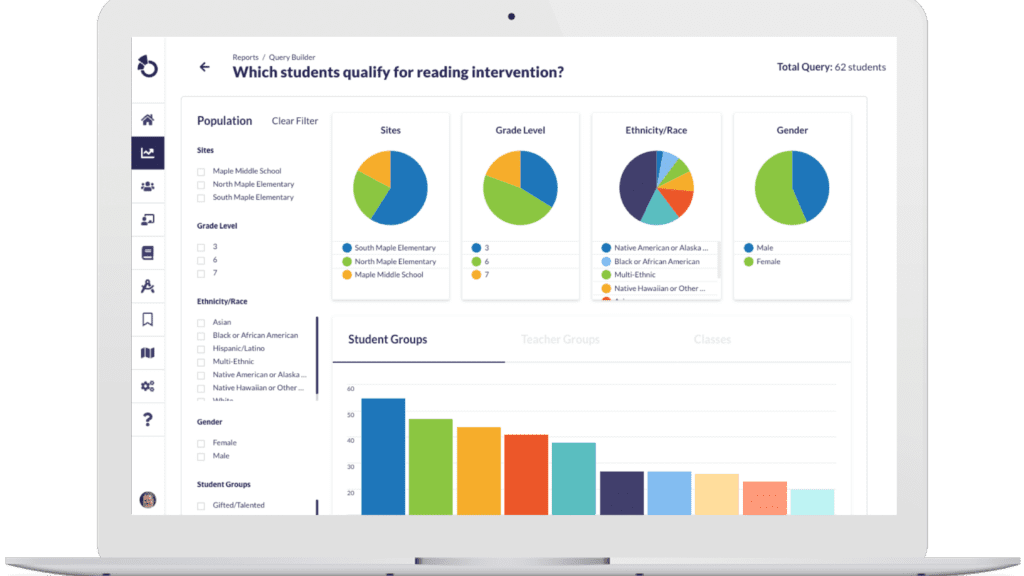
Student success doesn't stop at the classroom door. And for families trying to stay involved, it often means juggling five apps, waiting for a report card, or settling for one word answers to, How was school today? Otus brings grades, assignments, progress towards standards, learning plans, attendance, and behavior into one clear view, so families aren't left piecing it together themselves. They can check-in from their phone or computer anywhere for a quick at a glance view or a deeper dive into the full picture. Missing or late work is flagged right away, and for every class they see overall grades, scores on specific assignments, and a performance breakdown standard by standard. For your district, it means fewer surprises, fewer support calls, and families who show up as partners in their students' learning. For families, it means real insight into how their child is doing, and the chance to step in before a small issue becomes a bigger one. This is Otus, built for the whole school community. Learn more at otus.com/school-community.
What this looks like in practice is less dramatic than it sounds. A parent checks a dashboard in their child’s learning platform and sees the same standards and progress markers their child’s teacher is examining that evening. They’re seeing the real picture, made legible, rather than a simplified summary crafted for public consumption. That same parent then walks into a conference already knowing the headline, meaning the conversation skips the catch-up and dives right into what to do next.
A district’s internal coherence, the framework it worked so hard to build, finally reaches all the way to the kitchen table, where a lot of decisions about a student get made. It’s the same work districts have already proven they know how to do, extended to the people who never should’ve been left out of it.
Request a demo!
See exactly how Otus can help your school accelerate student growth and improve student outcomes – all while saving educators time.