

Sep 30, 2026
How Hamilton County School District Turned Data Into Purpose
Chris Combass has spent 29 years in education, 17 of them as a high school teacher. His wife is a kindergarten teacher. Education is a calling, and the Combass family household runs on a shared love of teaching. So when Chris took on the role of Director of Teaching & Learning at Hamilton County School District in North Florida, he brought that same conviction to a new challenge: helping a small, rural district cut through the noise and tap into its data.
Hamilton County serves about 1,650 students across just two school buildings. It’s a tight-knit community, the kind where educators know every student by name, but with a 21.9% poverty rate (more than twice the national rate), the urgency to get instruction right is real.
At the ECTAC Exceeding Expectations Conference in June, Chris presented Clarity Over Chaos: Using Data With Purpose, a practical look at how a small, rural district found its way from data overload to data-driven action — action that is paying off. Hamilton County Elementary is on track to earn a B this year, which would be its highest grade to date.
Data everywhere, clarity nowhere to be found
Most districts aren’t short on data, and Hamilton County was no exception. FAST, i-Ready, attendance, behavior, PLC notes, benchmark results, intervention trackers — the list goes on. Sound familiar?
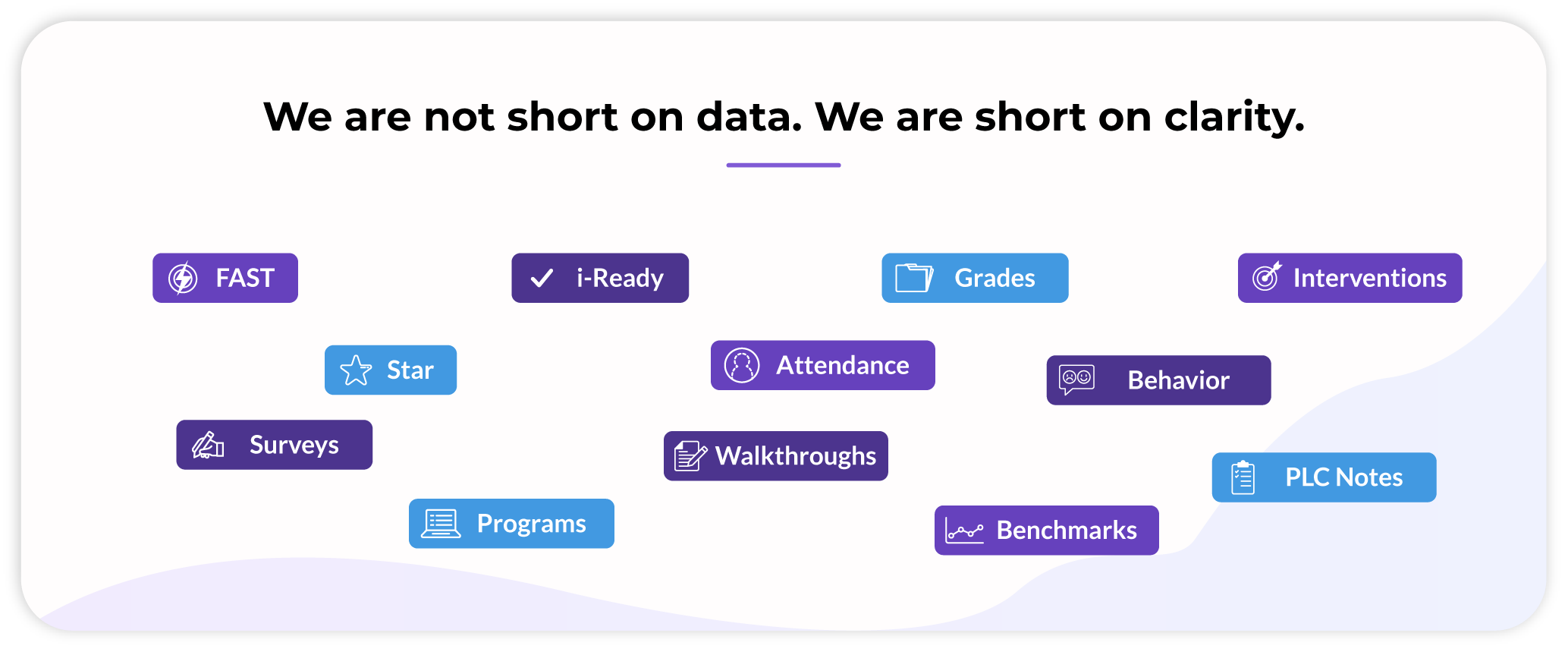
For many schools, data collection has outpaced the capacity to act on it. Educators log into multiple platforms, export files, build spreadsheets, and then spend half of their PLC time just finding the right data instead of doing anything productive with it. By the time a teacher identifies a student who needs support, weeks have passed.
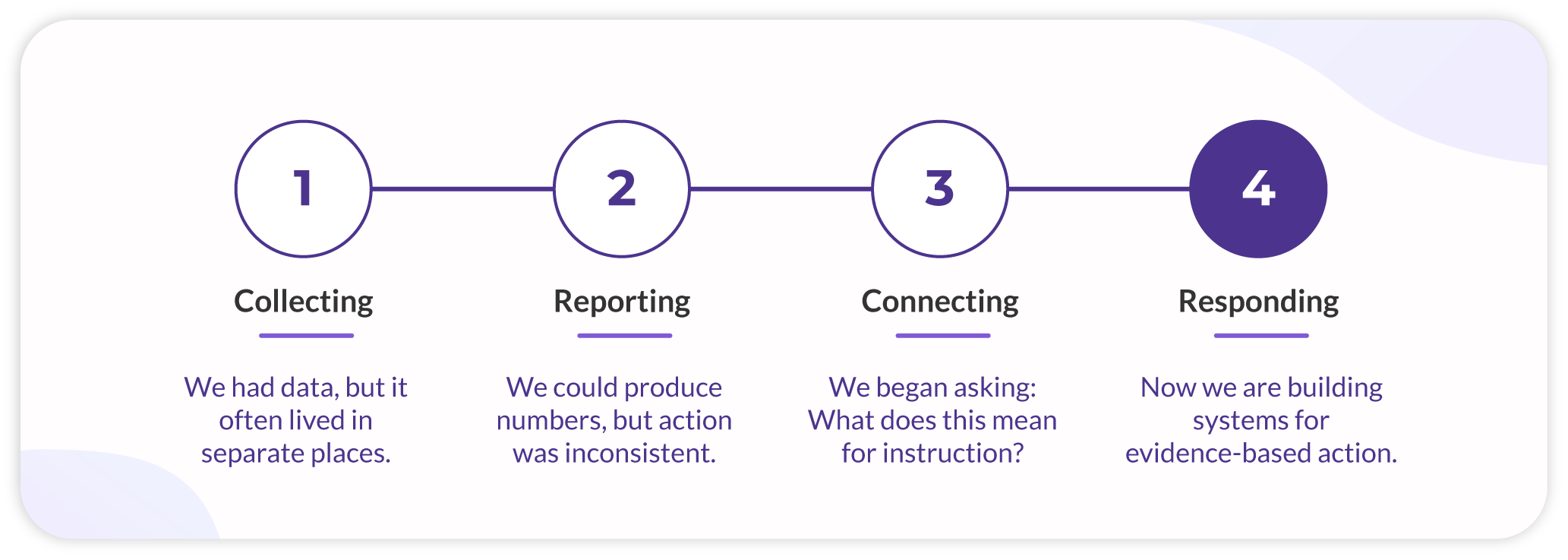
Being intentional with student data
Hamilton County’s Teaching & Learning Playbook holds everyone to a clear standard. Every conversation, decision, and action must be intentional and directly connected to improving teaching, learning, and student outcomes.
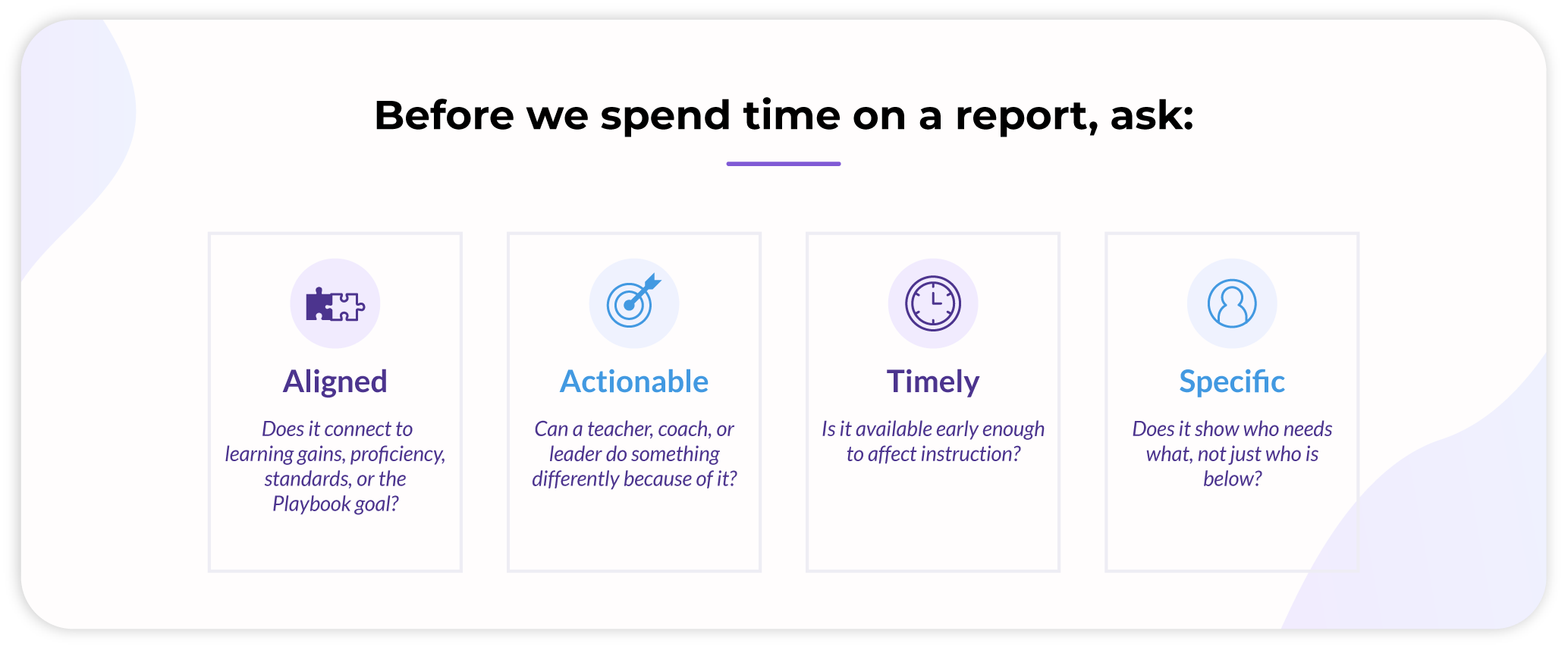
Before spending time on any report or data source, Chris’ team asks four questions:
- Is it aligned with learning gains, proficiency, or the goals we’re working toward?
- Can a teacher, coach, or leader do something different because of it?
- Is it available early enough to meaningfully influence instruction?
- Does it show who needs what, not just who is behind?
If the answer to any of those is no, it might be worth knowing, but it’s not worth acting on. That distinction alone saves a lot of wasted meeting time.
A repeatable system beats a one-time fix
Hamilton County runs what they call a “Level Up Cycle,” a four-step framework for moving from evidence to action and then back to evidence. Know the score, call the play, check the film. Not once a grading period or once a year, but continuously; hence the “cycle.”
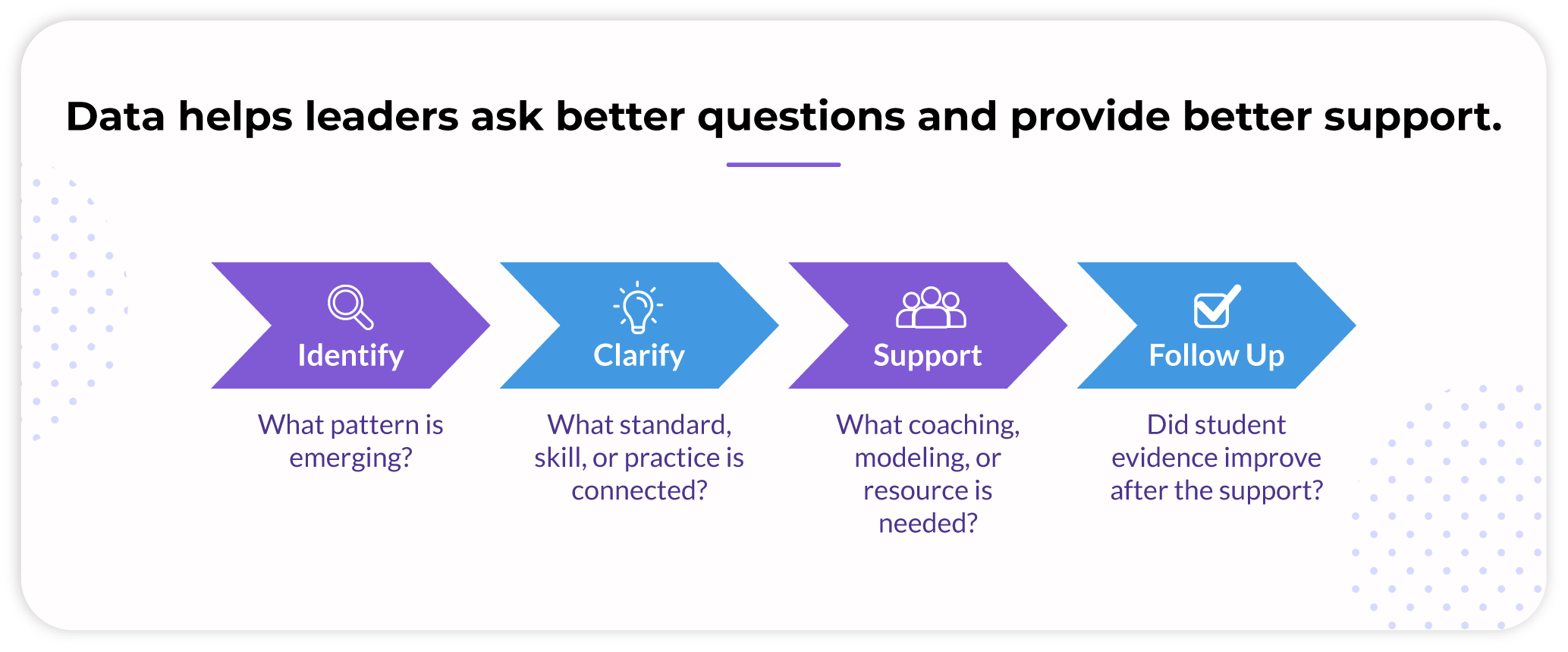
The process fits perfectly into a 30-minute PLC meeting: five minutes to identify the priority standard and student groups, ten to analyze evidence and name the gap, ten to assign a reteach or intervention action with a clear owner, and five to schedule a check-back with a specific evidence source. Less time hunting, more time deciding.
Taking the data a step further
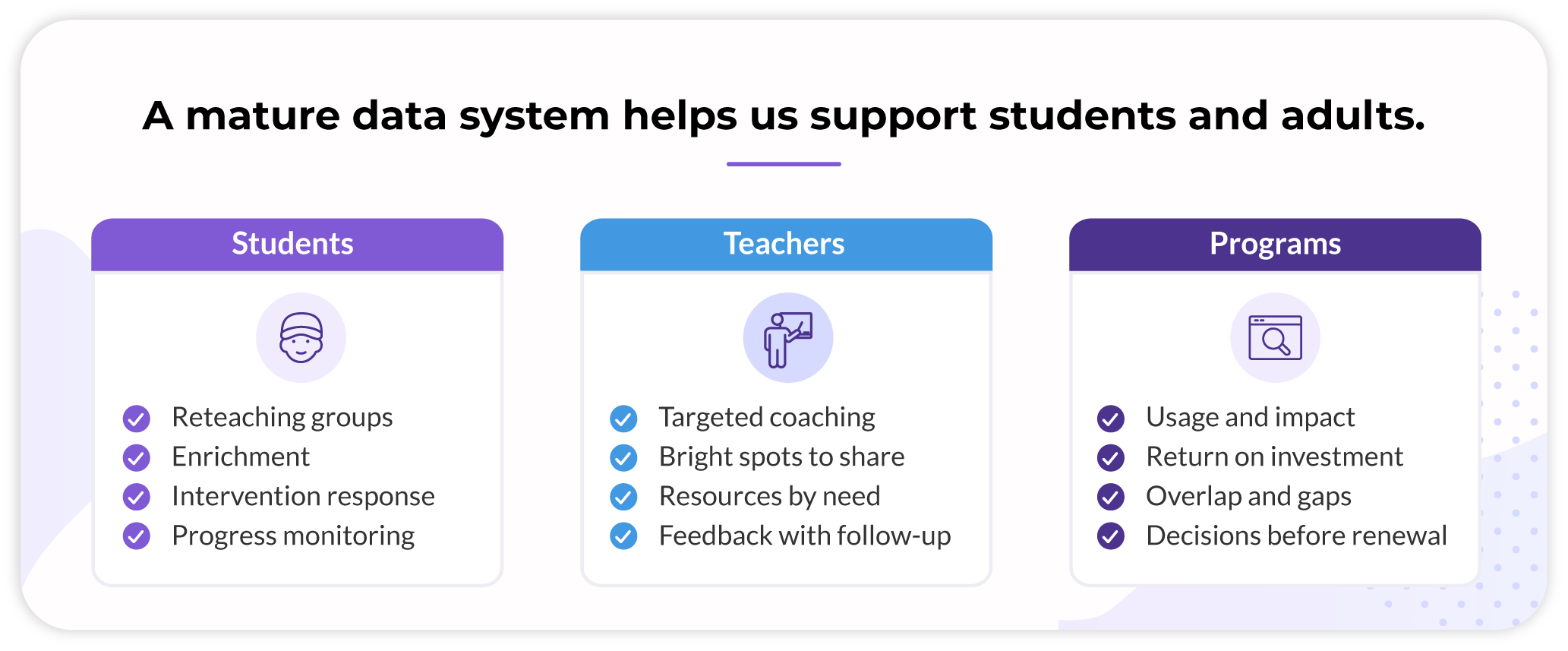
At many schools, data conversations start and end with students. Hamilton County pushes them further—into teaching and coaching— and then brings it back to kids. For teachers, it enables coaching conversations grounded in evidence rather than assumptions (moving from “here is your score” to “here is the evidence, and here is how we can move it”). For programs, it surfaces hard questions about usage, impact, overlap, and whether a tool is really earning its place. All of it, ultimately, in service of better student outcomes.
Hamilton County has thought carefully about AI’s role, too. It can help surface patterns and generate starting points for analysis, but it doesn’t replace professional judgment. Student privacy, FERPA compliance, and human review before action remain non-negotiable. The goal is faster insight, not unchecked automated decisions.
The promise to teachers
Perhaps the most standout takeaway from the session was also the simplest: if a data system doesn’t help teachers make better instructional decisions, simplify it.
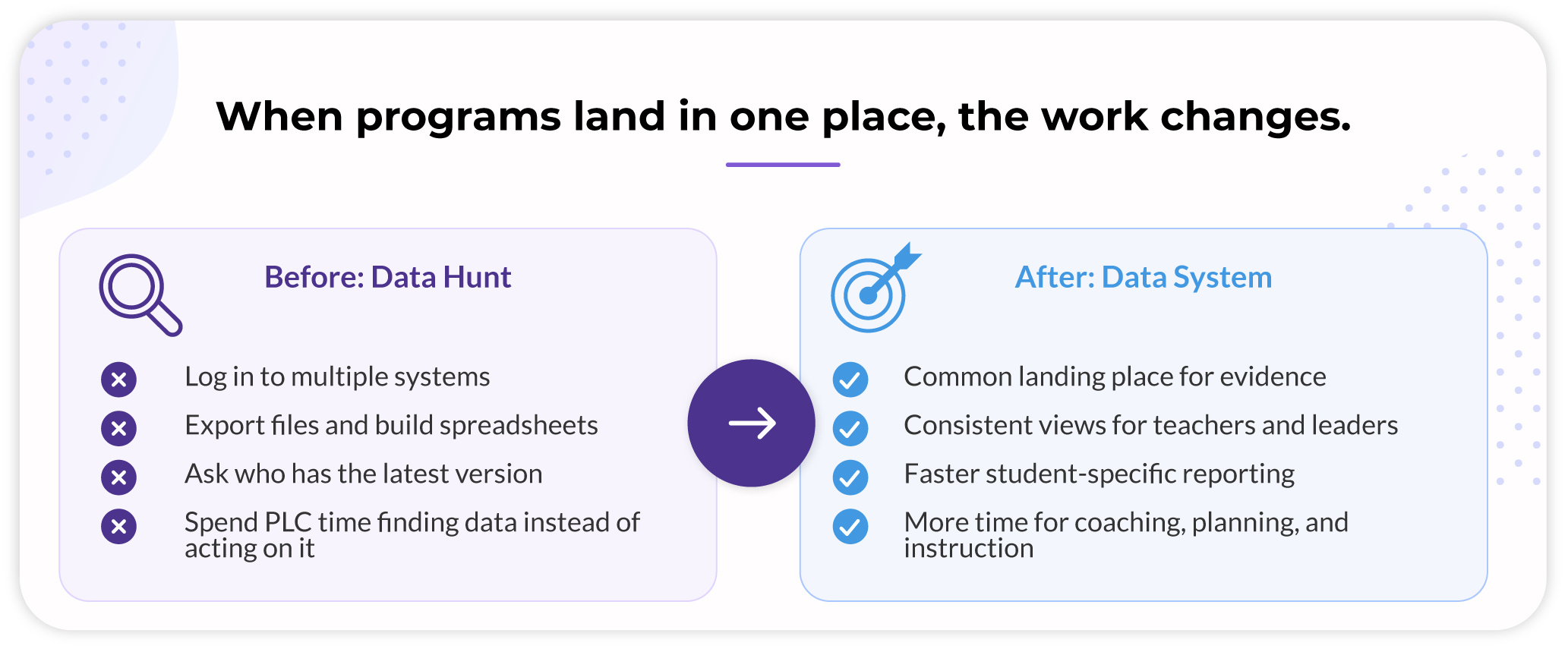
For Hamilton County, the standard is usefulness. Does it give teachers less to hunt through, clearer next steps, faster access to what they need, and better outcomes for students? If not, it’s just adding to the chaos.
That’s a standard worth holding everywhere.
Related Resources
Request a demo!
See exactly how Otus can help your school accelerate student growth and improve student outcomes – all while saving educators time.