

Aug 12, 2026
During a recent webinar on Portrait of a Learner implementation, an audience member asked a question that many districts might be wondering about: Do you think your Portrait could be scaled to the state level, or is the district level really the right level of implementation?
It’s a reasonable thing to wonder. If the goal is to prepare all students for the same world, why not build one shared framework and roll it out everywhere?
Jeannie Rohrer, Supervisor of Instruction at Carroll County Public Schools in Kentucky, had a clear answer. The processes and systems behind a Portrait, she said, can likely be aligned across districts. But the actual competencies have to stay local.
“I would hate to lose community representation there, “ she said.
And she’s absolutely right. A statewide Portrait sounds efficient on paper, but a rural district in eastern Kentucky and a suburban district outside Louisville are not preparing students for the same community. Their employers are different. Even their families carry different values and priorities. When those two communities each sit down and ask what they want for their graduates, they’re going to hear different things. A Portrait that tries to speak to everyone will likely speak to no one.
That said, there is something useful that districts can share. While every Portrait looks different, a Digital Promise analysis of 69 district Portraits found that communities across the country keep arriving at the same broad themes. In other words, the language varies, and the emphasis shifts, but the commonalities are real and offer an excellent starting point.
What districts have in common
Think of the categories below less as a template and more as a starting point for your own community conversation. The words you choose, the examples you use, and the way you define mastery all have to come from you. But knowing where other districts have landed can help your team walk into those conversations with some useful context.
Here are the five categories that show up most consistently, along with some of the ways districts can put their own stamp on them.
Critical thinking, creativity, and problem-solving
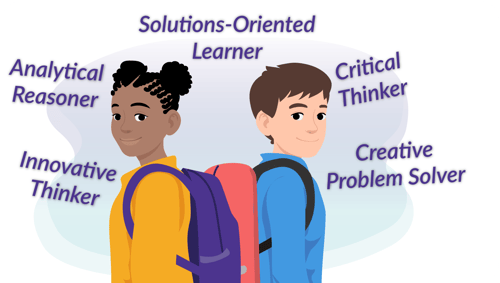 This is the most universally represented category in Portrait frameworks nationally. Nearly every district, in one form or another, wants graduates who can analyze a situation, weigh evidence, work through complex challenges, and generate creative solutions without someone handing them the answer. Some districts treat critical thinking and creativity as a single competency; others separate them. Both approaches are common, and either can work depending on how your community thinks about the distinction.
You’ll see this show up as critical thinker, creative problem solver, innovative thinker, analytical reasoner, solutions-oriented learner, or simply thinker. For example, Carroll County’s Panther Path has two competencies that live in this space. Their Critical Thinker competency focuses on analyzing issues, making informed decisions, and creating solutions supported by credible evidence. Their Empowered Learner competency rounds that out with the mindset side: persisting through difficulties, seeing failure as an opportunity to learn, and planning for self-improvement. Together, they reflect something a lot of districts are discovering: that thinking skills and the disposition to use them are two different things, and both are worth naming.
Communication
The ability to communicate clearly, purposefully, and across different contexts and audiences comes up in virtually every Portrait. Districts expect students to demonstrate this across multiple formats, not just traditional writing and speaking, but digitally and visually as well.
You’ll see this described as effective communicator, articulate speaker, storyteller, presenter, or even digital communicator. Some districts specify written and oral communication separately. Others, like Carroll County, take a broader view. Their Effective Communicator competency includes conveying ideas clearly in writing, verbally, digitally, and visually, but also developing a responsible digital footprint, adapting to the needs of an audience, and listening actively to understand others’ perspectives. The best communicators are just as intentional about receiving as they are about sending.
Collaboration
The ability to work with others, be it across differences, across disciplines, or across roles, is a consistent priority in Portrait frameworks nationally. This one often gets reinforced by community and business partners, who cite it as one of the skills missing from new graduates entering the workforce. Carroll County heard exactly this from their local employers, and it became a key component of the Panther Path.
Carroll County’s Productive Collaborator competency gets specific about what collaboration looks like in practice. Working well with others is the baseline. Carroll County’s definition goes further, including making individual contributions to a larger group, giving and receiving feedback, taking ownership of team outcomes, and resolving conflicts productively. That last one can easily be overlooked in how districts define collaboration, but it reflects something real about what working with others requires.
Character and citizenship
This category has the most variation in language across Portrait frameworks, but the underlying intent is consistent: districts want graduates who are not just skilled but who contribute positively to their communities, act with integrity, and understand their role in something larger than themselves.
You’ll see these named engaged citizen, ethical leader, person of character, responsible community member, global citizen, and culturally competent individual. Some districts root this deeply in local values. Kamehameha Schools, which serves Native Hawaiian students, made culture core to their Portrait of a Graduate, rooting their competencies in Native Hawaiian identity, heritage, and connection to community rather than adopting a generic framework.
Carroll County’s Panther Path doesn’t have a standalone citizenship competency, but the values show up throughout. Their Empowered Learner competency includes exploring post-secondary options and taking actionable steps toward a productive future. Their Productive Collaborator includes resolving conflicts productively and valuing individual contributions. And the district’s guiding motto — “Where Rivers Unite, Futures Ignite: Empowering Integrity, Engaging Community” — speaks directly to the character and citizenship values that run through the whole framework.
Self-direction and resilience
This category is all about the inner game. The capacity to set goals, manage oneself, and bounce back from failure. Post-pandemic, this one has taken on even more urgency in Portrait conversations across the country.
You’ll see this described as self-directed learner, resilient individual, growth-oriented student, lifelong learner, or perseverant. Kettle Moraine School District in Wisconsin specifically calls out resilience as a core competency in their framework, recognizing that the ability to recover from setbacks is as important as any academic skill.
Carroll County captures this most directly in their Empowered Learner competency. The skills listed there—persisting through difficulties and seeing shortcomings as an opportunity to grow—reflect what this category is really about. Planning for self-improvement ties it all together; growth means coming out the other side with something to show for it.
One more category worth watching: AI literacy
Not surprisingly, a growing number of districts are now asking whether their Portrait still reflects the world their students are entering. Districts like Agua Fria SD and Portland Public Schools are actively revisiting their Portrait of a Graduate profiles to incorporate AI-inclusive language.
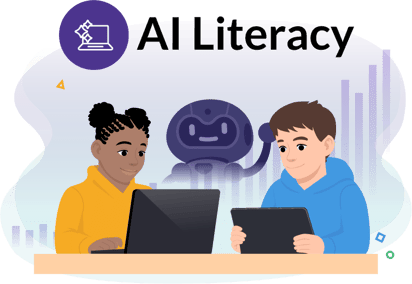 The goal is to prepare students to navigate a world where AI is woven into nearly every professional field. They want graduates who think critically about outputs, use tech ethically, and bring the distinctly human skills that machines can’t replicate.
Bullitt County Public Schools in Kentucky shows what this can look like in practice. Students there developed an AI assistant platform in their Java Programming I course, and the district aligned the project directly to competencies in their Graduate profile. AI literacy doesn’t have to live outside a Portrait as a separate initiative. The strongest frameworks are flexible enough to absorb it.
If your district built its Portrait a few years ago, it might be worth asking whether it still reflects the world your students are walking into.
It all starts with the conversation
None of the categories above are meant to be dropped into a document and called a Portrait. The point Jeannie Rohrer and Dr. Terra Greenwell reinforced throughout the webinar is that the process of building a Portrait matters as much as the product. When teachers, families, community members, and students are in a room together asking what we want for our kids, the competencies that emerge from that conversation are more valuable than any borrowed language could ever be.
The categories here are a starting point. A way to walk into those community conversations with some useful context about where other districts have landed. What your community decides to do with them — the words they choose and the things they keep coming back to — that’s where your Portrait begins.
Request a demo!
See exactly how Otus can help your school accelerate student growth and improve student outcomes – all while saving educators time.