

Aug 12, 2026
Like many great ideas in education, a Graduate Profile can sound powerful on paper. But the real test comes when the vision leaves the page. Can students describe it? Can teachers use it? Can families see what it looks like in practice?
Those questions sat at the center of a CASE conference session led by Becky Langlois, Ed.D., Executive Director of Assessment and Innovation, and Jeff Einerson, Director of Data and Instructional Technology, from Weld County School District Re-3J. Their presentation showed how their Re-3J built a Graduate Profile with community input, translated it into clear rubrics, and began weaving it into instruction, reflection, and reporting across the district.
The best part? Over time, the work became more visible, more measurable, and more meaningful for everyone involved.
It started with community voice
Weld Re-3J began this work in 2023 through community engagement. Parents, community members, and staff helped identify the skills and aspirations they wanted for students, giving the district a clearer picture of what graduate readiness should mean locally.
That initial input shaped an aspirational vision aligned to the district’s strategic plan. Just as important, the rollout was gradual and collaborative. Staff helped define grade-appropriate language and activities, which gave the work more clarity and made it easier to apply across schools.
Four competencies that gave the profile structure
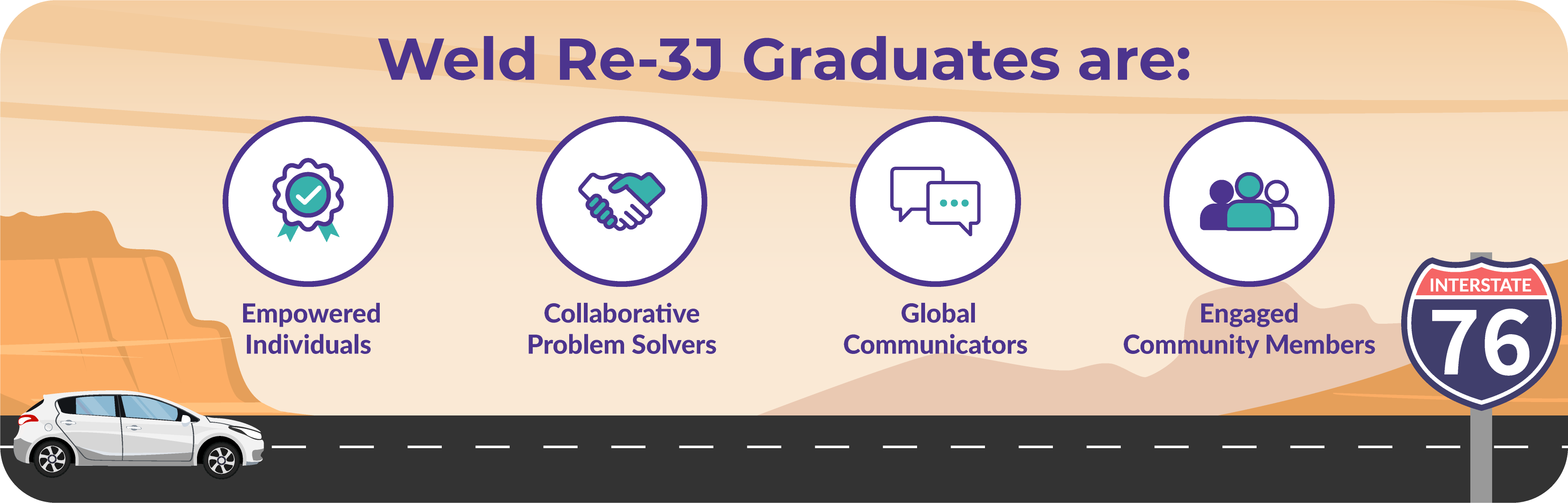
Weld Re-3J’s Graduate Profile is built around four competencies:
Collaborative Problem Solver
Focuses on critical thinking, innovation, and open-mindedness to solve complex challenges
Global Communicator
Emphasizes empathy, global awareness, and interpersonal communication skills
Empowered Individual
Develops academic mastery, perseverance, self-awareness, and self-advocacy
Engaged Community Member
Promotes civic awareness, social awareness, and effective teamwork within society
Together, these competencies create a fuller picture of readiness. Instead of defining success by grades alone, the profile highlights the personal, interpersonal, and cognitive skills students absolutely need for college, career, and life.
Rubrics that made the vision usable
One of the strongest parts of Weld Re-3J’s approach was how the district turned broad aspirations into something schools could really use.
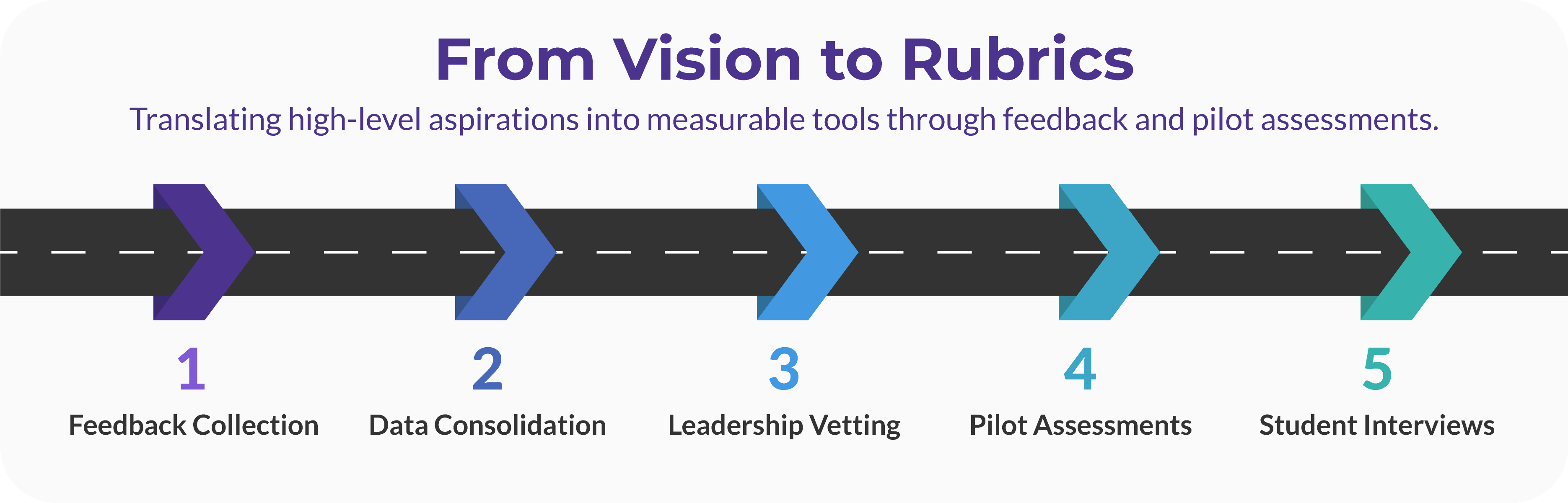
After collecting feedback, the district organized that input into grade-band rubrics. The Instructional Leadership Team refined the structures, and students participated in pilot assessments to give feedback on the language and overall meaningfulness.
That’s the key here. It’s fairly easy to name competencies. What makes the work usable is accurately defining what growth looks like.
Weld Re-3J’s rubric uses a three-level scale:
- Emerging
- Developing
- Proficient
In grades 6 through 12, students complete self-assessments by marking whether they have met specific competencies within a category. Teachers also complete a rubric to provide a professional assessment. Together, those perspectives create a more complete picture of student growth.
Building a process around it
For a Graduate Profile to do its job, it needs a rhythm that makes it part of the school year.
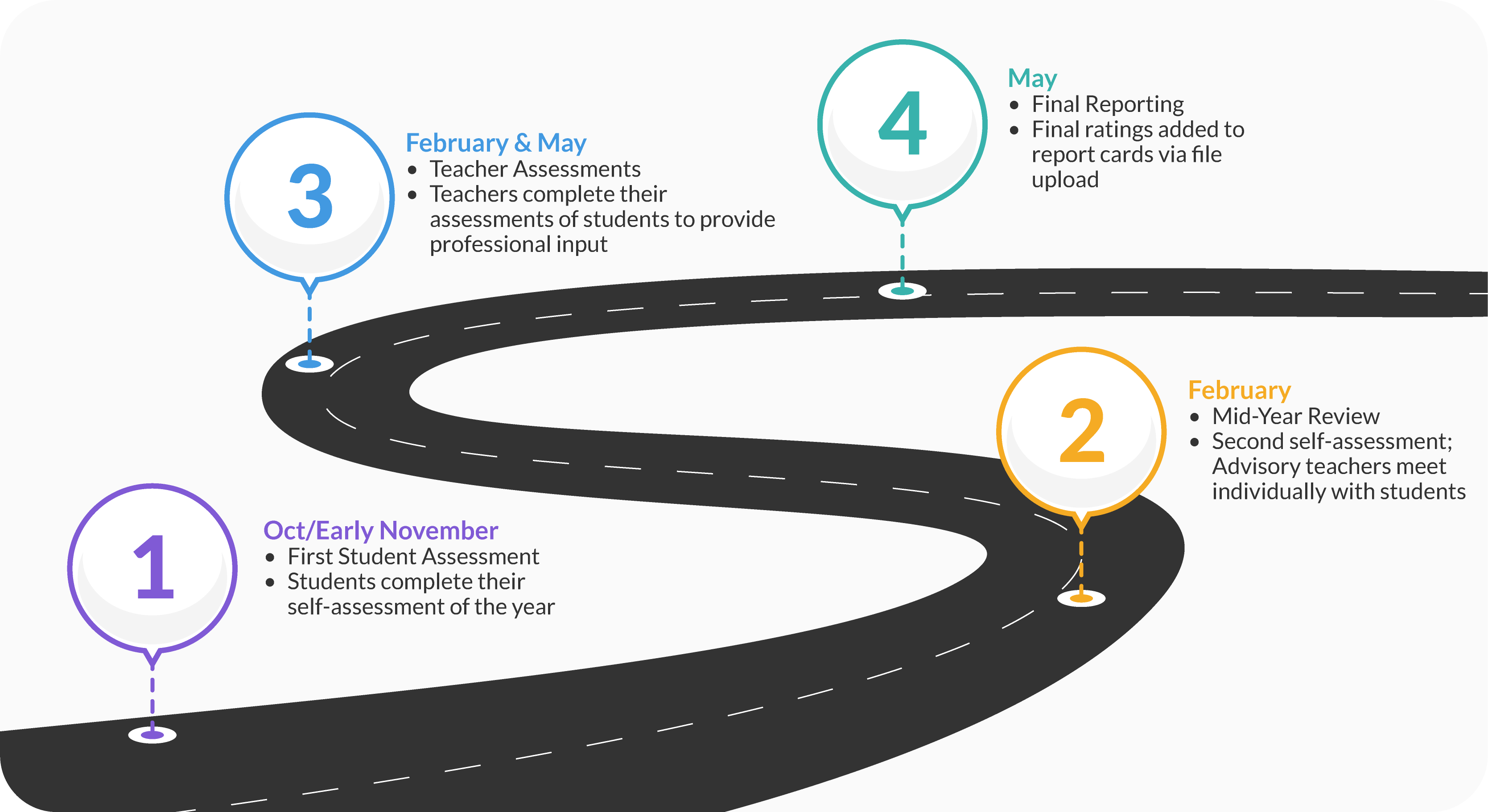 Weld Re-3J outlined a yearly cycle that includes student assessment, teacher reflection, and reporting. Students complete their first self-assessment in October or early November. A mid-year review follows in February, along with a second self-assessment and individual meetings with advisory teachers. Teacher assessments happen later in February and May, with final reporting added later in the spring.
This structure helps the work stick. The Graduate Profile becomes a significant part of how students reflect, how teachers respond, and how progress is discussed over time.
 The district is also embedding the work into existing systems. At the elementary level, essential skills appear on report cards, and in middle and high school, ratings are integrated into advisory.
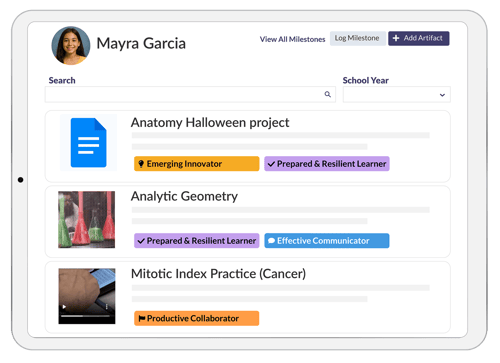
Of course, a framework like this also needs a place to live. Otus helps support this work by giving Weld Re-3J a central place to bring together student data, plans, and progress over time. Before Otus, Weld’s team was piecing together information from their SIS, Google Drive, and third-party tools, which made it difficult (and frustrating) to track growth and maintain consistent plans. Today, Otus gives the district a clearer, more streamlined way to review progress, connect evidence of growth, and work toward a more complete student portfolio over time.
Teachers and leaders each have a role
Leaders from Weld Re-3J made it clear: this work depends on shared responsibility.
For teachers, that includes designing with intention, holding high expectations while providing the right supports, creating inclusive classrooms, modeling reflection and growth, and integrating competencies into daily instruction and feedback.
For leaders, it includes championing a coherent vision, supporting instruction through observations and feedback, cultivating collective efficacy, prioritizing professional learning, and using data to drive improvement and close opportunity gaps.
That connection between classroom practice and leadership support is a key part of what keeps the work moving.
Why Weld’s profile continues to serve its community
For Weld Re-3J, the Graduate Profile answers a big question: What does true readiness look like here? It creates a shared language across schools, ties learning to life beyond the classroom, and reflects the values the community wants to see in its graduates.
The district also connected the profile to college and career readiness. At Weld Central High School, the work aligns with a broad range of career pathways like agriculture, natural resources, skilled trades, STEM, IT, arts and design, FACS, and health and human services. In other words, the competencies are grounded in students’ real futures.
And the work isn’t done. Weld Re-3J’s next phase includes student portfolios, continued refinement of the rubric, expanding the advisory curriculum to support competencies, and stronger communication with families and the community. That forward motion is crucial; a Graduate Profile should never be a finished document to file away, but rather a living document that evolves and that the district continues to build around.
What other districts can learn from Weld
Weld Re-3J’s process shows what can happen when a Graduate Profile is built to guide real conversations, reflection, and growth over time.
That starts with input from any district’s most valuable resource: its community. It means defining competencies clearly enough for students, teachers, and families to understand what they look like in practice. It also requires building in opportunities for reflection, creating a shared process around implementation, and giving the work a place to live over time.
Weld’s approach also shows the value of pacing. Instead of rushing from vision to full rollout, the district took time to gather input, refine the language, pilot the rubric, and build the structures needed to support the work. That slower, more intentional approach is often what gives major initiatives like this a better chance at not only succeeding initially, but lasting long-term.
Weld Re-3J is proof that when built with intention, a Graduate Profile can become something students reflect on, teachers support, and communities rally around.
Request a demo!
See exactly how Otus can help your school accelerate student growth and improve student outcomes – all while saving educators time.